
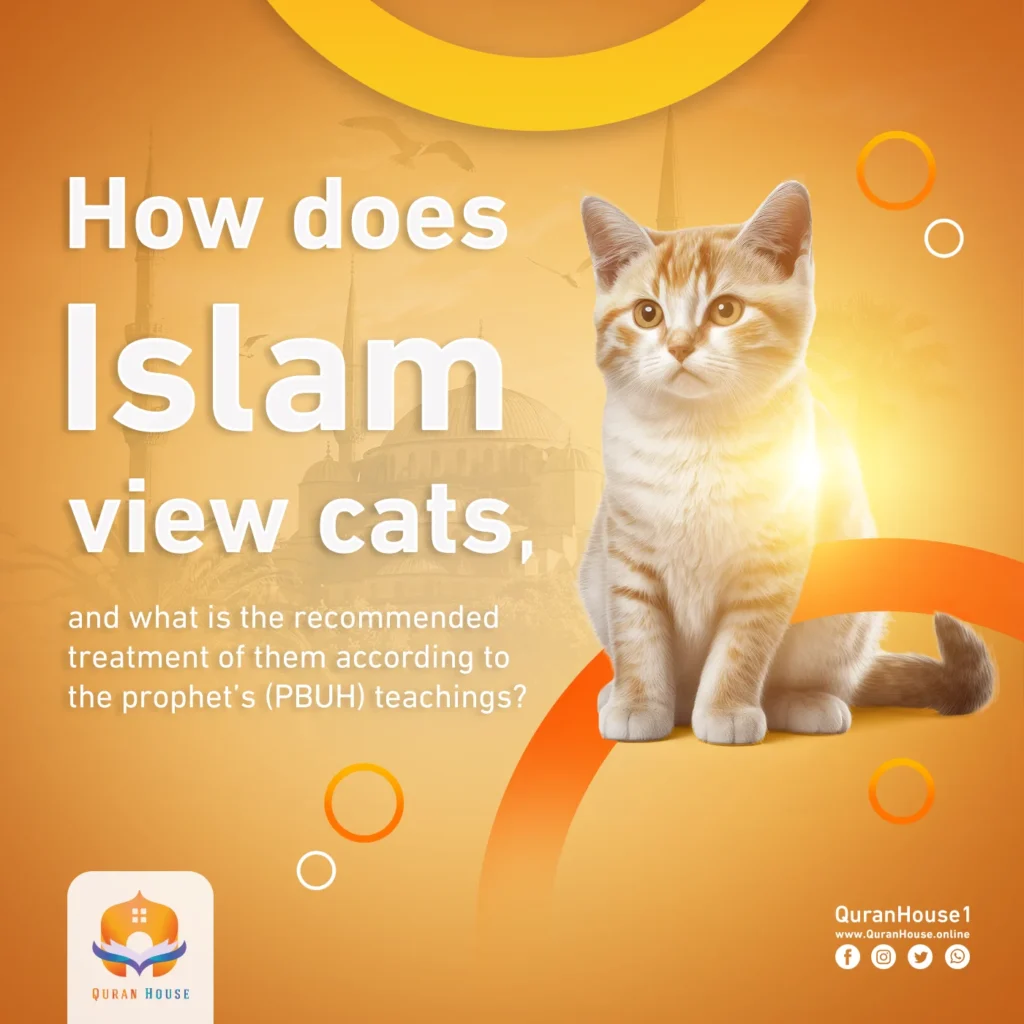

Many pet owners wonder, can a cat touch the Quran without an issue? Islamic teaching treats cats as clean animals, unlike some other pets.
Islam is a sacred flower, forever blossoming with leaves of mercy and compassion that spread into the whole world, reaching the hearts of all of Allah’s conscious creations, human beings and animals alike.
Should you allow your cat to physically touch the Quran?
It is generally permissible for cats to touch the Quran, but there are some precautions that should be taken to ensure the Quran is not damaged or disrespected. These precautions include keeping the Quran in a closed box or drawer when not in use, and making sure your cat is not allowed to chew on or play with it.
Memorize the Quran at your own pace with our Quran Memorization Course, a program that provides personalized guidance and support to help you memorize the Quran.
What are the Islamic teachings regarding physical contact between the Quran and pure animals?
There are several guidelines regarding physical contact between the Quran and pure, tahir animals.
1. Cleanliness is a must
Cleanliness is a must when touching or handling the Quran, since we are instructed to be pure and tahir when holding it. Although cats are naturally pure, they can become impure and najis due to being unclean fairly often. Unless your cat has been recently washed and is clean, it should not touch the Quran.
Understand the Quran in its original language with our Quranic Arabic Course, a program that helps you learn Arabic as it is used in the Quran.
2. Respect is mandatory
Respect is mandatory when handling the Quran, since it is the holy book of Islam. However, this respect can only be conducted through beings with consciousness and awareness of what they are doing. Human beings possess this type of consciousness and are therefore capable of respecting the book, but animals lack this type of awareness, which is why they cannot show the Quran the respect it deserves as the direct word of Allah.
3. The Quran should be kept from damage
The Quran should be kept from damage, but since animals are not aware of its importance, value, or holiness, they would not care much about keeping it from being torn or thrown, the way a human being naturally would.
Handling the Quran in a household with pets
Handling the Quran in a household with pets takes real effort and requires a consistently high level of concentration, since you will need to care for the Quran while still allowing your pet cat some freedom to roam.
There are a number of measures to follow to ensure the Quran is respected around pets.
1. Keep the Quran out of reach
Keep the Quran out of the reach of your pets by placing it somewhere high, in a closed cupboard, or in a room your pets do not have access to. This helps prevent accidental damage while still allowing you to study and memorize the Quran at your own pace, from the comfort of your home, with qualified teachers.
2. Keep the Quran in a secure place
Keep the Quran in a secure place that will keep it protected and safe, even if your pet manages to get hold of it. You can put it inside a tightly closed box that requires a key to open, or use some other method through which you remain the only one with access.
3. Keep the pet clean
Keep the pet as clean as possible, so that it would be fine if it came into contact with the Quran in any way. Cleaning your pet does not only involve refreshing showers, but also taking them to the vet and giving them all necessary vaccinations, to make sure they are protected from any illness that might result from contact.
4. Close observation when using the Quran
It is extremely important to closely observe your pet while using the Quran, since they might want to explore or play with the item in your hand. You should always be aware of where your pet is and what it is doing while the Quran is out.
Discover effective strategies for Quran memorization in our insightful article on how to memorize the Quran and never forget it.
How does Islam view cats, and how should they be treated according to the Prophet’s teachings?
Islam’s view of cats is positive, and this positivity is reflected repeatedly in the teachings of our generous Prophet, peace be upon him, and in how Islam instructs us to treat them.
The Prophet, peace be upon him, is narrated to have spoken about cats, saying, “They are not impure, rather they are among the males and females who go around among you.”
In Islam, if a blind cat approaches your house, you are required to take care of it, since it is incapable of fending for itself. In such a case, if one turns their back on it, they are considered sinful.
The Islamic view of cats is further demonstrated by an incident narrated by our wise Prophet, peace be upon him: a woman was condemned to eternal punishment for tying up a cat, not giving it food, and also not allowing it to roam freely to find food for itself.
Abd Ar-Rahman Ibn Sakhr, one of the prominent companions of the Prophet, was nicknamed Abu Hurayra, meaning the father of the little kittens, because little kittens and cats were always gathered around him, reluctant to leave his generosity and compassion behind.
Let’s spread some love to these beautiful creatures, and share our cat pet names together. Let us know in the comments below the name of your pet cat.
Our guide on the surahs of the Quran offers an in-depth look at the chapters of the Quran, providing valuable insights into their meanings and significance.
Why cats specifically hold a special place in Islamic tradition
Cats occupy a uniquely favored position among animals in Islamic tradition, largely due to their natural cleanliness and their close, gentle companionship with the Prophet and his companions. Unlike some other animals whose contact requires purification before prayer, cats are considered inherently pure in Islamic jurisprudence, which is part of why they are welcomed so warmly into Muslim homes across the world. This distinct status reflects a broader Islamic principle of extending kindness to all of Allah’s creation, with cats serving as a particularly visible and relatable example of that teaching.
Balancing love for pets with respect for the Quran
Many Muslim families who keep cats want to know how to balance genuine affection for their pets with the reverence the Quran deserves, and the answer lies in thoughtful, practical habits rather than any conflict between the two. Simple routines, storing the Quran in a dedicated, elevated location, using a protective cover, and staying attentive when the Quran is out of storage, allow a household to enjoy the companionship of a cat without compromising the respect due to the sacred text. Over time, these habits become second nature, requiring little ongoing effort once established.
Frequently asked questions
Is it sinful if a cat accidentally touches the Quran?
No, accidental contact is not sinful. The concern is more about ongoing respect and cleanliness rather than treating any single incidental touch as a serious violation.
Do other pets, like dogs, follow the same rules as cats regarding the Quran?
Different animals carry different rulings in Islamic jurisprudence regarding purity, and dogs in particular are treated differently from cats in many schools of thought, so it is worth consulting a knowledgeable scholar for guidance specific to other types of pets.
Should the Quran be kept completely out of a room where pets are allowed?
This is not strictly necessary, but keeping the Quran in a secure, elevated location within that room, out of a pet’s physical reach, is a practical way to prevent accidental damage.
What should I do if my cat’s fur or paws are visibly dirty?
In that case, it is best to keep the Quran away from the cat until it has been cleaned, since cleanliness is an important consideration when it comes to physical contact with the Quran.
Practical daily habits for Quran care in a pet friendly home
- Store the Quran on a shelf or surface your pets cannot easily reach or jump onto.
- Use a fabric or protective cover when the Quran is not actively being read.
- Wash your hands and ensure a reasonably clean environment before handling the Quran, modeling the same care you hope to extend to your pets.
- Keep your cat’s grooming and veterinary care up to date, both for their own health and to minimize any risk of transferring dirt onto shared household items.
Why compassion toward animals reflects a broader Islamic value
The Prophet’s teachings on cats are best understood as one visible example of a much larger Islamic principle: that mercy extends beyond the human community to all living creatures. This principle appears repeatedly throughout Islamic tradition, from instructions on humane treatment of animals used for food, to warnings against cruelty toward any creature, to encouragement for feeding and caring for strays. Viewing the specific guidance around cats within this broader context helps explain why Islamic scholars have historically taken such teachings seriously, treating kindness toward animals not as a minor courtesy, but as a genuine reflection of a believer’s character and faith.
Learning more about Islamic teachings on compassion and respect
Questions like this one open the door to a much broader and richer set of Islamic teachings on compassion toward animals and proper respect for the Quran. At Quran House, our online Islamic Studies courses explore these topics in depth, helping students understand not just the practical rulings, but the deeper values behind them. Instructors trained at Al-Azhar guide students through these teachings with patience, connecting everyday questions like this one to the broader Islamic worldview.
The broader Islamic concept of purity and its role in daily life
The concept of purity, referred to as taharah in Islamic jurisprudence, extends far beyond questions about the Quran and pets, shaping how Muslims approach prayer, worship, and even everyday household objects. Understanding taharah as a spectrum, rather than a strict binary of pure versus impure, helps explain why cats occupy such a favorable position despite occasionally coming into contact with dirt or mess in the course of ordinary life. A cat’s default state is considered pure, and only specific circumstances, such as visible dirt or contact with something unclean, temporarily affect that status until it is resolved through cleaning.
How different Islamic schools of thought approach this question
While the general permissibility of a cat touching the Quran is widely agreed upon, the specific precautions recommended can vary somewhat between different schools of Islamic jurisprudence and individual scholars. Some scholars place greater emphasis on physical barriers, such as covers and secure storage, while others focus more heavily on the general cleanliness of the animal itself. These variations reflect the same underlying values, respect for the Quran and compassion toward animals, expressed through slightly different practical emphases. Consulting a knowledgeable local scholar can help clarify which specific approach aligns best with your particular school of thought and personal household circumstances.
Teaching children about respecting the Quran around pets
Households with both children and pets face an additional layer of complexity, since young children are still learning both how to handle the Quran respectfully and how to interact safely and gently with animals. Turning this into a teaching moment, rather than treating it purely as a rule to follow, tends to produce better long term results. Explaining to children why the Quran is kept in a specific place, and involving them in simple, age appropriate routines like helping put the Quran away after reading, builds both respect for the sacred text and responsible pet care habits simultaneously.
Final thoughts
Cats hold a genuinely special, favored place in Islamic tradition, and their presence in a Muslim household is not at odds with maintaining proper respect for the Quran. With a few thoughtful, consistent habits, families can enjoy the companionship of their cats while still honoring the Quran as it deserves. Islam’s emphasis on kindness toward animals, exemplified so clearly through its teachings on cats, stands as a beautiful reminder of the mercy and compassion woven throughout the faith, values that extend to every creature under a Muslim household’s care.
Final Thoughts
So, can a cat touch the Quran? Generally yes, since cats are considered clean in Islamic tradition. For the original text, see Quran.com.
Quick FAQ
Can a cat touch the Quran while praying nearby? Yes, a cat touching the Quran or being nearby during prayer is not considered impure.

To learn more about Islamic etiquette, join a Tafseer course at Quran House. In short, can a cat touch the Quran without concern? Most scholars agree a cat touching the Quran is not impure, and this is why many households allow their cat near the Quran freely.