
A Completed Khatmah With A Record Of It
You finish the mushaf inside the month, with each juz' marked off as you read it aloud to a teacher rather than silently to yourself. Your progress sheet shows the date every juz' was completed.
Live 1-to-1 · Private Classes
Ramadan is the one month of the year when the Quran asks more of you than any other. This Ramadan Quran Program gives you a teacher, a daily portion, and a finish line, so the month passes with pages behind you instead of good intentions.
Classes run from the first night through the 29th, scheduled around suhoor, iftar, and taraweeh in your own time zone. You read, you get corrected, and you walk into the night prayer already familiar with what the imam is about to recite.
A clear route, not random lessons
Most Quran courses are built for a steady year-round rhythm. Ramadan is not that. Your energy shifts, your sleep shifts, and the amount of Quran you want to read multiplies, so this program is built as a 30-day sprint rather than an open-ended track. Every session is tied to a dated plan that ends on the night before Eid, and the teacher's job is to keep you on that plan when the fasting hours get long.
Enrollment opens in Sha'ban so your schedule and your teacher are fixed before the moon is sighted. These ramadan quran classes stay with the same instructor for all thirty days, which means no one re-tests your level mid-month and no page gets read twice by accident.
Connected curriculum
The syllabus is dated, not open-ended. Each part below maps to a specific stretch of the month, and your teacher adjusts the weight of each one to your level in the first two sessions.
You and your teacher split the mushaf into daily portions and place them where your focus is highest, whether that is after suhoor or between maghrib and isha. The plan is written down on day one and adjusted twice: after the first week, and before the last ten nights.
Reading a full juz' a day means reading in hadr, the fast pace, where madd lengths and ghunnah are the first things to collapse. Sessions drill the specific rules that break down when you speed up, so volume does not cost you accuracy.
If you pray taraweeh at home or lead part of it, you need a set of surahs ready and secure. You choose them with your teacher in week one, then memorize and test them well before the night you need them.
Each session previews the juz' your masjid will cover that night, including the difficult stops, the repeated phrases, and the places where recitation tends to move quickly. You arrive at the masjid having already read what you are about to hear.
Long fasting days are when older memorization quietly slips. A fixed share of every class is spent reciting previously memorized portions back to your teacher, so the month adds to your hifz instead of trading one part for another.
Certain passages come back again and again in Ramadan: the verses on fasting in al-Baqarah, Surah al-Qadr, the closing surahs, the du'a verses. You study their meaning in plain language so the recitation is something you follow, not only pronounce.
For students who will lead family prayer, sessions cover practical imamate: choosing a portion of the right length, recovering from a slip, prostration of forgetfulness, and pacing a rak'ah so those behind you can keep up. Your teacher listens to a full rak'ah and gives notes.
The final ten nights get their own schedule, built to fit around qiyam, i'tikaf, or travel for umrah. Sessions move later, shorten where needed, and focus on finishing the khatmah before the 29th.
Course outcomes
Four things you can point to at the end of the month, not a general feeling of improvement.
You finish the mushaf inside the month, with each juz' marked off as you read it aloud to a teacher rather than silently to yourself. Your progress sheet shows the date every juz' was completed.
By the last week you can read a full portion late at night, fasting or fed, without the pronunciation errors that show up under fatigue. Your teacher tests this deliberately in the final sessions.
You recognize the passages as they are recited, know where the imam is in the juz', and can pick up the meaning of what is being read. This is the difference most students report first.
In the last week, your teacher helps you set a realistic daily portion for after Eid and books the first review session for the month that follows. The aim is that the 1st of Shawwal is not the day the reading stops.
Inside a real lesson
Short class snippets show how the teacher explains, listens, corrects and confirms progress.
How a class runs
Every session follows the same clear rhythm, so learners always know what comes next.
You open by reciting the portion assigned from the previous session, out loud, while the teacher marks errors on a shared copy. This takes the first eight to ten minutes.
The teacher works through the marked spots, demonstrates each one, and has you repeat until the correction holds. Only the rules that actually broke are covered, not a general tajweed lecture.
The middle of the session goes to new memorization or to reciting older portions from memory, depending on the plan set in week one. Ramadan sessions weight this toward revision, since retention is what the long days threaten.
The class closes by assigning the next daily portion and skimming the juz' scheduled for taraweeh that night. You leave knowing exactly what to read before suhoor and what to expect at the masjid.
You end this ramadan quran course with a finished mushaf and a record of the date each juz' was completed. You also have a set of surahs secured for taraweeh and a teacher's note on where your tajweed improved. The last session sets a dated reading plan for Shawwal so the month does not end on the 29th.
Why Quran House
Qualified teachers, a connected route and progress families can see.
Class times are set against your local prayer timetable, not a generic calendar, so nothing is booked over iftar or the night prayer. Late-night and pre-dawn slots are open throughout the month.
Every instructor on this program commits to all thirty days before Ramadan begins, including the last ten nights when availability elsewhere thins out. You are not reassigned mid-month.
One teacher tracks your khatmah, your memorization, and your recurring errors across the entire month. Nothing resets, and no session is spent re-explaining where you left off.
A shared progress sheet records each juz' as it is completed and shows whether you are ahead or behind the plan. If you fall behind by more than two days, your teacher restructures the remaining portions instead of letting the gap grow.
Parents, teenagers, and children can be enrolled on the same program with separate teachers and portions suited to each level. Family schedules are arranged back-to-back so one evening slot covers the household.
If you travel during the month, sessions move to your new time zone and missed classes are rescheduled rather than forfeited. Students performing umrah in the last ten nights can switch to a lighter daily plan.

Al-Azhar University Graduate (Languages & Translation - English)
Quran · Tajweed · Islamic Studies · English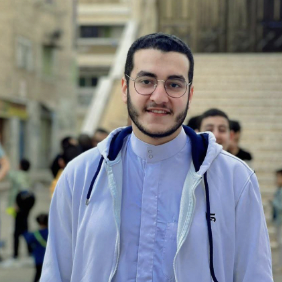
Al-Azhar University Graduate
Quran · Tajweed · Islamic Studies
Experienced Quran & Islamic Educator
Quran · Tajweed · Arabic · Islamic Studies · Quran Memorization & UnderstandingFamily reviews
Verified feedback from families who took this route.
“Assalamu Alaikum! I am so thankful for Sheikh Abdullah and the incredible depth of knowledge he brings to every class. What I love most is how the instructor gives 100% attention and is constantly correcting my recitation, which has made my Tajweed noticeably better. The lessons are always engaging, especially when learning Hadith, and realizing how much more there is to discover truly inspires me to keep learning and growing.”
“My experience with Quran House Academy has been truly amazing, standing out as one of the best academies I've attended despite trying many others. I have already seen clear improvements in my tajweed, and for the first time, I am able to learn the in-depth meanings behind surahs. The classes are never boring or overly strict; they are always entertaining, and the teacher is calm, fun, and easy to talk to.”
“My experience with this academy has been really amazing. I had been to a lot of Quran classes before, but they just weren't a good fit for me until I found this Quran Academy, which turned out to be the best one I could ever ask for. It helps me memorize the Quran in a fun and effective way. Previously, I didn't know much Quran and felt hesitant, but now I feel great when my friends ask me to recite because I have memorized so much. The teachers are fantastic—they make the learning process easy, fun, and fast while being incredibly supportive. Another great advantage is the reward system that keeps me motivated. Overall, it has made a huge difference in my Quran memorization journey.”
Real progress
Had limited awareness of Islamic knowledge and Quranic studies, realizing just how much was left to learn.
Actively engaged in interactive classes with personalized guidance, showing measurable improvements in Tajweed and a deep motivation to continuously learn more.
Learn Quran Online
“The lessons are always engaging, especially when learning Hadith, and realizing how much more there is to discover truly inspires me to keep learning and growing.”Read full story
Mustafa struggled to understand the deep meanings behind the surahs and had limited progress across various other academies.
He successfully improved his tajweed and gained deep comprehension of the surahs through engaging and enjoyable classes.
Learn Quran Online
“The classes are never boring or overly strict; they are always entertaining, and the teacher is calm, fun, and easy to talk to.”Read full story
Testimonials
“Before these classes I recited the Quran without knowing the rules of Tajweed. Now I understand why I pronounce each word as I do, and my recitation has improved greatly.”
Riyan
Student
“Over a year with Quran House has helped me learn the Quran, memorize the suras, and speak Arabic better. It’s an excellent place to learn, and I recommend it to everyone.”
Aminah Moamen
Student
“After trying other Quran classes that didn’t suit me, I found this academy, and it’s been the best I could ask for. It makes memorizing the Quran fun and effective, I feel confident reciting for my friends, the teachers are fantastic and supportive, and the reward system keeps me motivated.”
Abdul Aziz
A student
FAQs
Practical answers before you book the first class.
Classes begin on the first night of Ramadan and run through the 29th. Registration opens in Sha'ban, and we recommend booking then, since evening slots fill first.
Yes. Your teacher rebuilds the daily plan around the days remaining, and if a full khatmah is no longer realistic, you set a portion target you can actually finish.
Most students take daily classes during Ramadan, though five sessions a week is also available. Daily is what makes a full khatmah realistic in thirty days.
Yes. Late-night slots after isha and taraweeh are available, as are pre-dawn sessions before suhoor, in your local time.
No. The program takes students from basic recitation through advanced memorization, and your starting point is set in the first session.
Yes. Children are placed with teachers experienced in shorter attention spans and fasting days, with sessions kept to 30 minutes and a lighter daily portion.
Yes. Female teachers are available for women and children, and you can specify this at registration.
Tell your teacher in advance and your sessions move to Makkah time with a reduced daily portion. Nothing is forfeited.
If you attend daily and read the assigned portion outside class, yes, and the progress sheet will show it. Students who join late or take fewer sessions set a partial target instead.
You finish the program with a reading plan for Shawwal and the option to continue on a year-round course with the same teacher. Many students move to two or three sessions a week to hold the level they reached.
Register now
Tell us who the classes are for and we will match you with a tutor within 24 hours — no card, no obligation.
Continue exploring
Compare nearby routes before choosing the best starting point.