
Recognizing Core Words on Any Mushaf Page
Students can open an unseen page and identify familiar words without help. Teachers test this regularly with new passages, so parents and adult learners can see progress clearly.
Live 1-to-1 · Private Classes
From London to Sydney, many Muslims recite Al-Fatiha every day but still depend on a translation to follow its meaning. The Quranic Vocabulary Course at Quran House teaches the words that make up about 80% of the Quran.
Lessons are live and one-to-one with qualified teachers, and they are scheduled in your own time zone around school and work. Children and adults build understanding word by word, starting from the first class.
A clear route, not random lessons
Quran House is an online Quran academy that helps children and adults read, recite, understand, and memorize the Quran. Our Quranic Vocabulary Course is part of the Quranic Arabic track. Each new word is linked to verses students already recite.
Online learning suits families who cannot find a qualified Arabic teacher nearby. Students join from home on Zoom or Skype. Weekend slots are available; sisters and girls can learn with female teachers, and every lesson is shaped around the learner's level.
Connected curriculum
The course starts with high-frequency words and works up to full verses. Each area builds on the one before it. Your teacher adjusts the pace for children, teens, and adult beginners.
You begin with the words the Quran repeats most often, such as Allah, Rabb, qala (قَالَ, he said), and ard (earth). Because you learn these first, almost every Mushaf page will contain familiar words within your first weeks.
Most Quranic words come from three-letter roots. Once you know that ك ت ب relates to writing, you can recognize kitab, kataba, and maktub more easily. This area suits learners who already read Arabic script comfortably.
Small endings carry a lot of meaning. You learn that ـكُم means "you all" and ـهُم means "them," so words like 'alaykum and rabbihim make sense right away. This begins at the beginner level once reading is secure.
Words like fi, min, 'ala, inna, and alladhina appear constantly throughout the Quran. Learning them early shows you how sentences connect, even before formal grammar study. Adult beginners often find this area especially rewarding.
You learn to tell past verbs from present verbs, such as qala and yaqulu. Recognizing these patterns breaks long verses into readable pieces. This area suits students aged ten and above.
Many verses end with names like Ar-Rahman, Al-Ghafur, and Al-'Alim. You learn what each one means and notice how a verse's ending reflects its theme, which deepens your focus in Salah. This area suits all levels.
New words are applied to Al-Fatiha, Al-Ikhlas, Al-Falaq, An-Nas, and other short Surahs recited in prayer. Children who have memorized Juz Amma finally understand what they recite, and that makes revision more meaningful.
In the final stage, you read full verses word by word and match each term to its meaning without a translation.
If you are unsure where to begin, a free trial class with Quran House lets your teacher assess your reading and recommend the right starting area.
Course outcomes
These are the four outcomes students achieve with the Quranic Vocabulary Course. Students can test each one in their own Salah and daily recitation.
Students can open an unseen page and identify familiar words without help. Teachers test this regularly with new passages, so parents and adult learners can see progress clearly.
You will understand every word of Al-Fatiha and the short Surahs you recite in Salah. You follow the meaning as you pray instead of reciting sounds from memory alone.
You learn to break unfamiliar words into roots and patterns and work out their likely meaning. This skill keeps vocabulary growing after the course ends. It also prepares students for Quranic Arabic Grammar.
Students begin reflecting on verses directly instead of relying only on translations. This fulfills the purpose Allah describes for His Book and prepares students for our Tadabbur and Quran Tafseer courses.
Inside a real lesson
Short class snippets show how the teacher explains, listens, corrects and confirms progress.
How a class runs
Every session follows the same clear rhythm, so learners always know what comes next.
The class opens with a quick oral quiz on words from the last lesson. Your teacher places them inside short verses to check real recall. Any word that needs extra Muraja'ah is marked for revision.
Five to eight new words are taught inside the verses where they appear. Students see each word on the Mushaf page, hear it recited, and connect it to its root family.
Correct sounds protect meaning. Qalb (قَلْب) means heart, while kalb (كَلْب) means dog. For this reason, teachers carefully drill ق, ع, ح, and ض with non-Arabic speakers.
Each class ends with a short homework task, such as finding today's words in a familiar Surah. Parents of younger students receive a brief update on progress and on what to practise at home.
After every class, students leave with new words they can recognize in the Mushaf and clearer pronunciation of difficult letters. They also have a practical revision task that keeps the words fresh until the next lesson.
Why Quran House
Lessons are booked in your local time, whether that is Eastern Time in New York, GMT in London, or AEST in Sydney. Early mornings, after-school hours, and late evenings are all available.
Weekday evenings often fill up with homework and commuting. Weekend slots cover Saturday and Sunday in the West and Friday and Saturday in the Gulf, so practice stays steady without overloading the week.
Our qualified teachers, including Azhari and Ijazah-certified instructors, have years of experience explaining Arabic words to English speakers.
Sisters and girls can learn with female teachers, and brothers can choose male instructors. Having this choice gives families peace of mind and helps shy students take part and ask questions freely.
You learn in a familiar room with you nearby, with no travel through bad weather or evening traffic. Parents are welcome to sit in on any lesson.
Teachers record the words taught, test results, and pronunciation notes. Regular progress reports show parents and adult learners which words are mastered and which need more revision.

Al-Azhar University Graduate (Languages & Translation - English)
Quran · Tajweed · Islamic Studies · English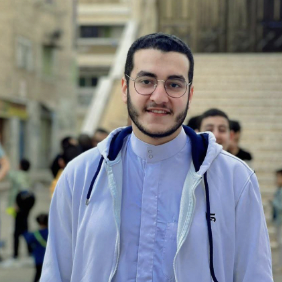
Al-Azhar University Graduate
Quran · Tajweed · Islamic Studies
Experienced Quran & Islamic Educator
Quran · Tajweed · Arabic · Islamic Studies · Quran Memorization & UnderstandingFamily reviews
Verified feedback from families who took this route.
“Assalamu Alaikum! I am so thankful for Sheikh Abdullah and the incredible depth of knowledge he brings to every class. What I love most is how the instructor gives 100% attention and is constantly correcting my recitation, which has made my Tajweed noticeably better. The lessons are always engaging, especially when learning Hadith, and realizing how much more there is to discover truly inspires me to keep learning and growing.”
“My experience with Quran House Academy has been truly amazing, standing out as one of the best academies I've attended despite trying many others. I have already seen clear improvements in my tajweed, and for the first time, I am able to learn the in-depth meanings behind surahs. The classes are never boring or overly strict; they are always entertaining, and the teacher is calm, fun, and easy to talk to.”
“My experience with this academy has been really amazing. I had been to a lot of Quran classes before, but they just weren't a good fit for me until I found this Quran Academy, which turned out to be the best one I could ever ask for. It helps me memorize the Quran in a fun and effective way. Previously, I didn't know much Quran and felt hesitant, but now I feel great when my friends ask me to recite because I have memorized so much. The teachers are fantastic—they make the learning process easy, fun, and fast while being incredibly supportive. Another great advantage is the reward system that keeps me motivated. Overall, it has made a huge difference in my Quran memorization journey.”
Real progress
Had limited awareness of Islamic knowledge and Quranic studies, realizing just how much was left to learn.
Actively engaged in interactive classes with personalized guidance, showing measurable improvements in Tajweed and a deep motivation to continuously learn more.
Learn Quran Online
“The lessons are always engaging, especially when learning Hadith, and realizing how much more there is to discover truly inspires me to keep learning and growing.”Read full story
Mustafa struggled to understand the deep meanings behind the surahs and had limited progress across various other academies.
He successfully improved his tajweed and gained deep comprehension of the surahs through engaging and enjoyable classes.
Learn Quran Online
“The classes are never boring or overly strict; they are always entertaining, and the teacher is calm, fun, and easy to talk to.”Read full story
Testimonials
“Before these classes I recited the Quran without knowing the rules of Tajweed. Now I understand why I pronounce each word as I do, and my recitation has improved greatly.”
Riyan
Student
“Over a year with Quran House has helped me learn the Quran, memorize the suras, and speak Arabic better. It’s an excellent place to learn, and I recommend it to everyone.”
Aminah Moamen
Student
“After trying other Quran classes that didn’t suit me, I found this academy, and it’s been the best I could ask for. It makes memorizing the Quran fun and effective, I feel confident reciting for my friends, the teachers are fantastic and supportive, and the reward system keeps me motivated.”
Abdul Aziz
A student
FAQs
Practical answers before you book the first class.
Most children start around age seven or eight, once they read Arabic letters confidently. Younger children can begin with simple words from short Surahs, and teachers adjust each lesson to the child's attention span.
Yes. Quran House schedules classes in any time zone, including US, UK, Canadian, Australian, Gulf, and European times. You choose slots that fit school runs, work hours, and weekend routines.
Yes. Qualified female Quran teachers are available for sisters, girls, and families who prefer them. You can request a female teacher when you book your free trial class.
Yes, as long as you can read Arabic script. Adults who cannot read it yet start with our Noorani Qaida Course. They move into vocabulary once letters and vowel marks are secure.
Yes. Quran House offers a free trial class. You meet your teacher, experience the lesson style, and receive a recommended starting level before choosing a plan.
Two to three classes a week suit most learners. Children aged seven to ten benefit from shorter, more frequent sessions. Adults often progress well with two classes plus ten minutes of daily revision.
A laptop, tablet, or smartphone with a stable internet connection is enough. Classes run live on Zoom or Skype. A headset helps students hear pronunciation clearly.
Teachers log every word taught, run regular recall tests on unseen verses, and share progress reports. Parents and adult learners can see mastered words and areas that need revision at a glance.
Missed classes can usually be rescheduled with advance notice. Contact the Quran House team, and they will help you find a new slot that fits your timetable.
Fees depend on class frequency, lesson length, and whether you choose private or family classes. Please contact Quran House directly for current pricing and the payment options available to you.
Register now
Tell us who the classes are for and we will match you with a tutor within 24 hours — no card, no obligation.
Continue exploring
Compare nearby routes before choosing the best starting point.