The benefits of Surah An-Naas make it one of the most recited surahs in a Muslim’s daily life. Naas means “mankind” and literally, “people.” The term refers to all people regardless of their race, religion, or background. Surah An-Naas is one of the shortest surahs in the Quran, and it is one of the Mu’awwidhatayn (the two surahs of seeking refuge), the other being Surah Al-Falaq.
The surah seeks refuge in Allah from Satan and the different forms of evil from both humans and jinn alike. It is a call-out prayer of taking refuge in Allah, the Lord, King, and God of all people, from the evil of the whispering Satan who whispers into the hearts of people.
In this guide, we go straight to the 6 authentic Surah An-Naas benefits, each supported by an authentic hadith or by the verses of the surah. After that, you will find the lessons of the surah, its context, and the answers to the most common questions about it.
1. Nothing Like It Was Ever Revealed
The Prophet ﷺ expressed his amazement at the greatness of Surah An-Naas and Surah Al-Falaq on the night they were revealed. ’Uqbah ibn ’Amir narrated that he said:
«أَلَمْ تَرَ آيَاتٍ أُنْزِلَتِ اللَّيْلَةَ لَمْ يُرَ مِثْلُهُنَّ قَطُّ؟ ﴿قُلْ أَعُوذُ بِرَبِّ الْفَلَقِ﴾ وَ﴿قُلْ أَعُوذُ بِرَبِّ النَّاسِ﴾»
“Have you not seen verses that were revealed tonight, the like of which has never been seen? ‘Say: I seek refuge in the Lord of daybreak’ and ‘Say: I seek refuge in the Lord of mankind.’”
Scholars explain that no other surahs are made up entirely of seeking refuge with Allah like these two. This is why they are known together as Al-Mu’awwidhatayn, and why the Prophet ﷺ relied on them more than any other words for protection.
2. It Is Sufficient Against Everything Morning and Evening
Reciting Surah An-Naas with Al-Ikhlas and Al-Falaq in the morning and evening is a complete daily protection. ’Abdullah ibn Khubayb narrated that the Prophet ﷺ told him:
«قُلْ ﴿قُلْ هُوَ اللَّهُ أَحَدٌ﴾ وَالْمُعَوِّذَتَيْنِ حِينَ تُمْسِي وَحِينَ تُصْبِحُ ثَلَاثَ مَرَّاتٍ، تَكْفِيكَ مِنْ كُلِّ شَيْءٍ»
“Say: ‘Say: He is Allah, the One,’ and the Mu’awwidhatayn in the evening and in the morning, three times; they will suffice you against everything.”
Al-Albani graded this hadith hasan. “Against everything” means against every evil, seen and unseen. This makes the three surahs one of the most important parts of the morning and evening adhkar.
3. It Is Recited After Every Prayer
The Prophet ﷺ commanded reciting the Mu’awwidhat after each of the five daily prayers. ’Uqbah ibn ’Amir said:
«أَمَرَنِي رَسُولُ اللَّهِ ﷺ أَنْ أَقْرَأَ بِالْمُعَوِّذَاتِ دُبُرَ كُلِّ صَلَاةٍ»
“The Messenger of Allah ﷺ commanded me to recite the Mu’awwidhat after every prayer.”
Al-Albani graded this hadith authentic. Reciting Surah An-Naas after every obligatory prayer keeps the believer under Allah’s protection throughout the day, in short moments that take less than a minute each.
4. The Prophet ﷺ Used It as a Ruqyah When He Was Ill
Surah An-Naas is part of the ruqyah, the healing recitation the Prophet ﷺ used for himself. ’Aishah, may Allah be pleased with her, narrated:
«أَنَّ رَسُولَ اللَّهِ ﷺ كَانَ إِذَا اشْتَكَى يَقْرَأُ عَلَى نَفْسِهِ بِالْمُعَوِّذَاتِ وَيَنْفُثُ، فَلَمَّا اشْتَدَّ وَجَعُهُ كُنْتُ أَقْرَأُ عَلَيْهِ وَأَمْسَحُ بِيَدِهِ رَجَاءَ بَرَكَتِهَا»
“Whenever the Messenger of Allah ﷺ fell ill, he would recite the Mu’awwidhat over himself and blow gently. When his pain became severe, I would recite them over him and wipe him with his own hand, hoping for its blessing.”
This hadith shows that reciting Surah An-Naas over oneself or a sick family member is a Sunnah. It is a form of seeking healing from Allah, done alongside, not instead of, the medical treatment Islam also encourages.
5. It Protects You Before Sleep
The Prophet ﷺ never slept without reciting Surah An-Naas. ’Aishah described his nightly habit:
«أَنَّ النَّبِيَّ ﷺ كَانَ إِذَا أَوَى إِلَى فِرَاشِهِ كُلَّ لَيْلَةٍ جَمَعَ كَفَّيْهِ، ثُمَّ نَفَثَ فِيهِمَا فَقَرَأَ فِيهِمَا: ﴿قُلْ هُوَ اللَّهُ أَحَدٌ﴾ وَ﴿قُلْ أَعُوذُ بِرَبِّ الْفَلَقِ﴾ وَ﴿قُلْ أَعُوذُ بِرَبِّ النَّاسِ﴾، ثُمَّ يَمْسَحُ بِهِمَا مَا اسْتَطَاعَ مِنْ جَسَدِهِ، يَبْدَأُ بِهِمَا عَلَى رَأْسِهِ وَوَجْهِهِ وَمَا أَقْبَلَ مِنْ جَسَدِهِ، يَفْعَلُ ذَلِكَ ثَلَاثَ مَرَّاتٍ»
“Every night when the Prophet ﷺ went to bed, he would cup his hands, blow into them, and recite: ‘Say: He is Allah, the One,’ ‘Say: I seek refuge in the Lord of daybreak,’ and ‘Say: I seek refuge in the Lord of mankind.’ Then he would wipe as much of his body as he could with them, starting with his head, his face, and the front of his body. He would do that three times.”
Together with Ayatul Kursi, these three surahs form the most complete bedtime protection in the Sunnah, as explained in our guide to the benefits of Ayatul Kursi.
Inside an Interactive One-on-One Session
Every class is live and personal. See how our tutor uses on-screen tools, quick reviews, and gentle correction to help a student build confidence with every new word.
Start Your Quran Journey With Quran House
Learn live and one-on-one with Al-Azhar-trained tutors, male and female, for children and adults, at a time that fits your timezone.
Try a Free Session6. It Protects You From the Whispers of Satan
The surah ends by seeking refuge from a specific enemy:
﴿مِن شَرِّ الْوَسْوَاسِ الْخَنَّاسِ الَّذِي يُوَسْوِسُ فِي صُدُورِ النَّاسِ مِنَ الْجِنَّةِ وَالنَّاسِ﴾
“From the evil of the retreating whisperer, who whispers into the hearts of mankind, from among the jinn and mankind.”
Scholars explain that “al-khannas” means the one who retreats: Satan whispers when a person forgets Allah, and he withdraws when Allah is remembered. Reciting Surah An-Naas is itself a remembrance of Allah that pushes these whispers away, and the surah teaches that evil whisperers can be both unseen jinn and people.
Surah An-Naas in Arabic and English
Surah An-Naas is the 114th and last surah of the Quran, found in the 30th Juz. It consists of 6 verses and a total of 20 words:
﴿قُلْ أَعُوذُ بِرَبِّ النَّاسِ مَلِكِ النَّاسِ إِلَٰهِ النَّاسِ مِن شَرِّ الْوَسْوَاسِ الْخَنَّاسِ الَّذِي يُوَسْوِسُ فِي صُدُورِ النَّاسِ مِنَ الْجِنَّةِ وَالنَّاسِ﴾
“Say: I seek refuge in the Lord of mankind, the King of mankind, the God of mankind, from the evil of the retreating whisperer, who whispers into the hearts of mankind, from among the jinn and mankind.”
The surah takes about a minute to recite, and because it is recited so often, it is worth learning to pronounce it correctly with our online Tajweed classes.
Lessons From Surah An-Naas
Beyond its protective benefits, Surah An-Naas carries practical lessons for daily life. To study them in depth verse by verse, our Quran Tafseer Course explains the surah with qualified teachers.
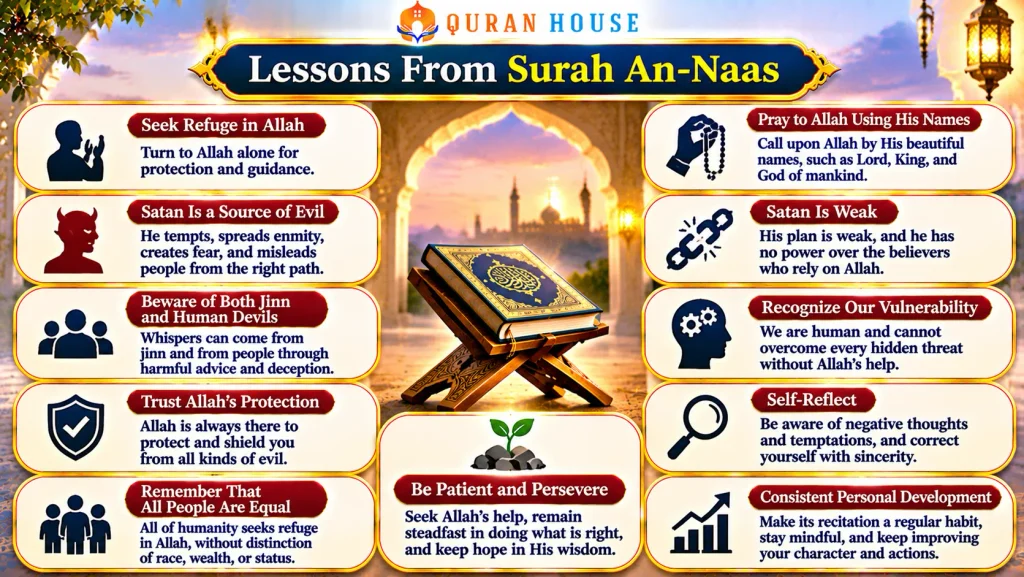
Seek Refuge in Allah
Seeking refuge in anyone else but Allah is useless because Allah is the King and God of all. No one can harm you or benefit you outside the realm of Allah’s will.
By constantly turning to Allah for refuge, we can protect ourselves from negativity and stay on the path of righteousness as we avert the evil influences caused by the whispers of Satan.
Pray to Allah Using His Names To Call Upon
The surah starts with calling upon Allah with His names: Lord of mankind, King of mankind, and God of mankind, as it goes on to seek refuge from all sorts of evil Satan poses. Allah says in the Quran:
﴿وَلِلَّهِ الْأَسْمَاءُ الْحُسْنَىٰ فَادْعُوهُ بِهَا﴾
“And to Allah belong the best names, so invoke Him by them.”
Satan Is a Source of Evil
Allah says in the Quran that Satan pushes people to evil step by step (24:21). He also says that Satan spreads hatred and enmity among people (5:91), spreads fear among his followers (3:175), promises poverty and invites to immorality (2:268), separates brothers (12:100), and makes false promises to his followers and then abandons them (8:48).
These and many other warnings in the Quran and Sunnah make clear that Satan is our sworn enemy.
Satan Is Weak
Satan lays gradual traps for people, causes them to forget what is important, fosters enmity, and whispers constantly to make evil look attractive. Yet Allah grants us opportunities to repent so that He may forgive us, as He forgave Adam long ago. Allah says:
﴿إِنَّ كَيْدَ الشَّيْطَانِ كَانَ ضَعِيفًا﴾
“Indeed, the plot of Satan has ever been weak.”
﴿إِنَّهُ لَيْسَ لَهُ سُلْطَانٌ عَلَى الَّذِينَ آمَنُوا وَعَلَىٰ رَبِّهِمْ يَتَوَكَّلُونَ﴾
“Indeed, there is for him no authority over those who have believed and rely upon their Lord.”
Allah also says that the believers soon notice Satan’s whispers and return to Him:
﴿إِنَّ الَّذِينَ اتَّقَوْا إِذَا مَسَّهُمْ طَائِفٌ مِّنَ الشَّيْطَانِ تَذَكَّرُوا فَإِذَا هُم مُّبْصِرُونَ﴾
“Indeed, those who fear Allah, when an impulse touches them from Satan, they remember Him and at once they have insight.”
Beware of Both Jinn and Human Devils
Most people think Satan and devils are unseen creatures from among the jinn only, when they can also be among us as humans. The last verse of Surah An-Nas warns of whisperers “from among the jinn and mankind,” reminding believers to be aware of influences that may lead them away from Allah.
Human devils may influence others through harmful advice, deception, or encouraging sinful behavior. Recognizing these negative influences helps Muslims remain careful about the company they keep and the ideas they accept.
Recognize Our Vulnerability
As humans, we are truly vulnerable and can only seek shelter and refuge from all sorts of evil in Allah. Surah An-Nas reminds us that we cannot overcome every hidden threat through our own strength alone.
Acknowledging this vulnerability encourages humility and sincere dependence on Allah. Instead of allowing fear to control our thoughts, we should turn to Him through prayer, remembrance, and seeking His protection.
Trust Allah’s Protection
Allah is always there to protect and shield us from all sorts of evil, so the surah instills a sense of calm, reminding believers that Allah watches over His creation and that they can seek refuge in Him.
The surah also teaches Muslims to strengthen their trust in Allah during moments of uncertainty. Reciting it regularly as part of the morning and evening remembrances and before sleeping helps believers maintain a habit of seeking Allah’s protection.
Self-Reflect
The surah highlights the whisperings of Satan into the hearts of people, which acts as a reminder and a warning. It calls for self-reflection to recognize negative thoughts and temptations that may influence our decisions and distance us from Allah.
Through honest self-examination, believers can become more aware of their intentions, reactions, and weaknesses. This awareness helps them resist harmful suggestions, correct their behavior, and seek Allah’s guidance when facing inner struggles.
Be Patient and Persevere
Even when times are hard, try your best to seek refuge in Allah and persevere until you complete the trials and tests of this world, insha’Allah. Surah An-Nas reminds believers that turning to Allah is an important source of strength when facing fear, temptation, and hardship.
Patience also means continuing to do what is right despite difficulties. By maintaining prayer, remembering Allah, and avoiding despair, Muslims can face challenges with greater hope and trust in His wisdom.
Remember That All People Are Equal Before Allah
Surah An-Nas mentions “mankind” in each of its first three verses, presenting all of humanity as seeking refuge in Allah alone, without distinction based on background. This reflects that all people are servants of Allah, regardless of their race, wealth, or social status.
The surah also reminds us that no person can claim independence from Allah or superiority based on worldly position. Every human being needs His protection, guidance, and mercy, which encourages humility and respect toward others.
Consistent Personal Development
The surah encourages mindfulness and adherence to good values, as believers stay alert and aware, constantly seeking refuge in Allah from evil around them and within them.
Making its recitation part of a regular daily routine can strengthen spiritual awareness and remind Muslims to examine their actions and intentions. Combined with learning the Quran and applying its teachings, this habit supports continuous spiritual growth.
The Context of Surah An-Naas
The hadiths indicate that the Mu’awwidhatayn (Al-Falaq and An-Naas) were revealed in Madinah. This is shown in the hadith of ’Uqbah ibn ’Amir about the night they were revealed (Sahih Muslim 814, quoted in benefit 1), as ’Uqbah accompanied the Prophet ﷺ in Madinah, and the two surahs are connected to the incident of the magic performed on him there.
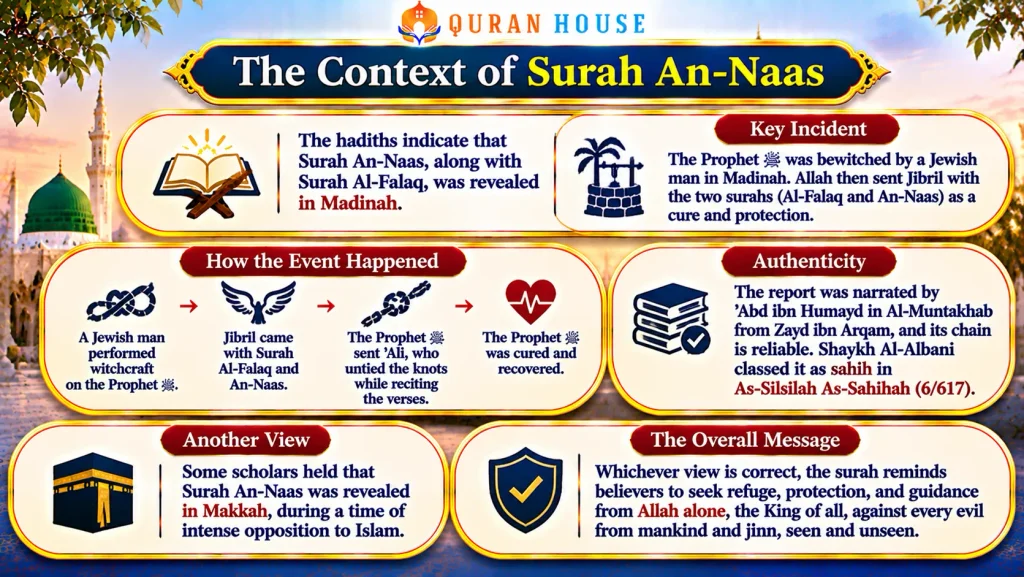
’Abd ibn Humayd narrated in Al-Muntakhab, from Zayd ibn Arqam, that a Jewish man bewitched the Prophet ﷺ and he fell sick. Jibril came to him bringing down the Mu’awwidhatayn and said: A Jewish man has bewitched you, and the item used for the witchcraft is in the well of so-and-so.
The Prophet ﷺ sent ’Ali, who brought it, and he instructed him to untie the knots and recite verses, so he began reciting and untying until the Prophet ﷺ rose as if he had been released from restraints. The Messenger of Allah ﷺ did not say anything to that man about what he had done, and he never confronted him with it.
The narrators of this chain are trustworthy, and Shaykh Al-Albani classed it as sahih in As-Silsilah As-Sahihah (6/617).
Some scholars held that Surah An-Naas was revealed in Makkah, at a time when Islam faced intense opposition and the Muslims were a persecuted minority. Whichever view is correct, the surah gave the believers a gentle reminder to seek refuge, protection, and guidance from Allah alone, the King of all, against every evil from mankind and jinn, seen and unseen.
Summary of Key Messages in Surah An-Naas
The six short verses of Surah An-Naas carry messages that every believer can carry through the day. Here are its key messages in brief:
- Seek protection and refuge in Allah alone.
- Be aware of your vulnerability as a human being.
- Self-reflect to recognize and resist the whispers of Satan.
- Trust in Allah’s protection.
- Remember that all people are equal before Allah.
- Be patient and persevere.
- Beware of Satan’s traps, from jinn and from people.
- Use Allah’s names to call upon Him.
Learning Through Play: A Live Kids Class
Young learners stay focused when lessons feel like a game. Watch a real Quran House class where interactive activities and a patient tutor keep a child engaged, reciting, and smiling from start to finish.
Start Your Quran Journey With Quran House
Learn live and one-on-one with Al-Azhar-trained tutors, male and female, for children and adults, at a time that fits your timezone.
Try a Free SessionLearn Surah An-Naas With Quran House
Surah An-Naas is one of the first surahs a child memorizes and one of the surahs an adult recites most often, in every prayer, every morning and evening, and every night before sleep. Reciting it correctly and understanding what you are asking Allah for makes this daily protection even more meaningful.
At Quran House, our Al-Azhar-trained tutors teach Quran, Tajweed, and Tafseer in live one-to-one sessions, with detailed feedback and ongoing evaluation of your progress. Children can start their journey with our Quran teachers for kids, learning short surahs like An-Naas with their meanings.
Whether you are teaching your child their first surahs or perfecting your own recitation, you will have a trusted teacher by your side at every step.
Explore Our Quran Courses:
- Quran Reading Course Online for Kids and Adults
- Learn to Read Quran in Arabic
- Learn to Read Quran for Beginners
- Quran Reading for Kids
- Quran Reading for Adults
- Quran Reading for Sisters
- Noorani Qaida for Beginners
- Noorani Qaida for Adults
- Noor Al-Bayan Course
Final Thoughts on Surah An-Naas Benefits
The benefits of Surah An-Naas come from the authentic Sunnah: nothing like it and Al-Falaq was ever revealed, it suffices the believer against everything when recited morning and evening, it is recited after every prayer and before sleep, and the Prophet ﷺ used it as a ruqyah when he was ill.
Its six short verses teach the believer to seek refuge in Allah alone, to recognize the whispers of Satan, and to trust Allah’s protection. Make it part of your daily adhkar, and teach it to your children with its meaning, so its protection stays with your family every day.
FAQs
What Is the Importance of Surah An-Naas?
Surah An-Naas is a protection for the believer, seeking refuge in Allah from the evil of Satan’s whispers, and the Prophet ﷺ said nothing like it was ever revealed.
What Is Surah An-Naas About?
It is about seeking refuge in Allah, the Lord, King, and God of mankind, from the evil of the whisperer among jinn and people.
Why Was Surah An-Naas Revealed?
It was revealed with Surah Al-Falaq as a protection for the Prophet ﷺ, and authentic narrations connect it to the magic performed on him in Madinah.
Where Was Surah An-Naas Revealed?
Many scholars say it was revealed in Madinah based on the hadiths, while some scholars held that it was revealed in Makkah.
When Should I Recite Surah An-Naas?
Recite it three times in the morning and evening, after every obligatory prayer, and before sleeping, as taught in the authentic Sunnah.
Where Can We Find Surah An-Naas in the Quran?
It is the 114th and last surah, found in the 30th Juz and in the last of the 7 manzils of the Quran.