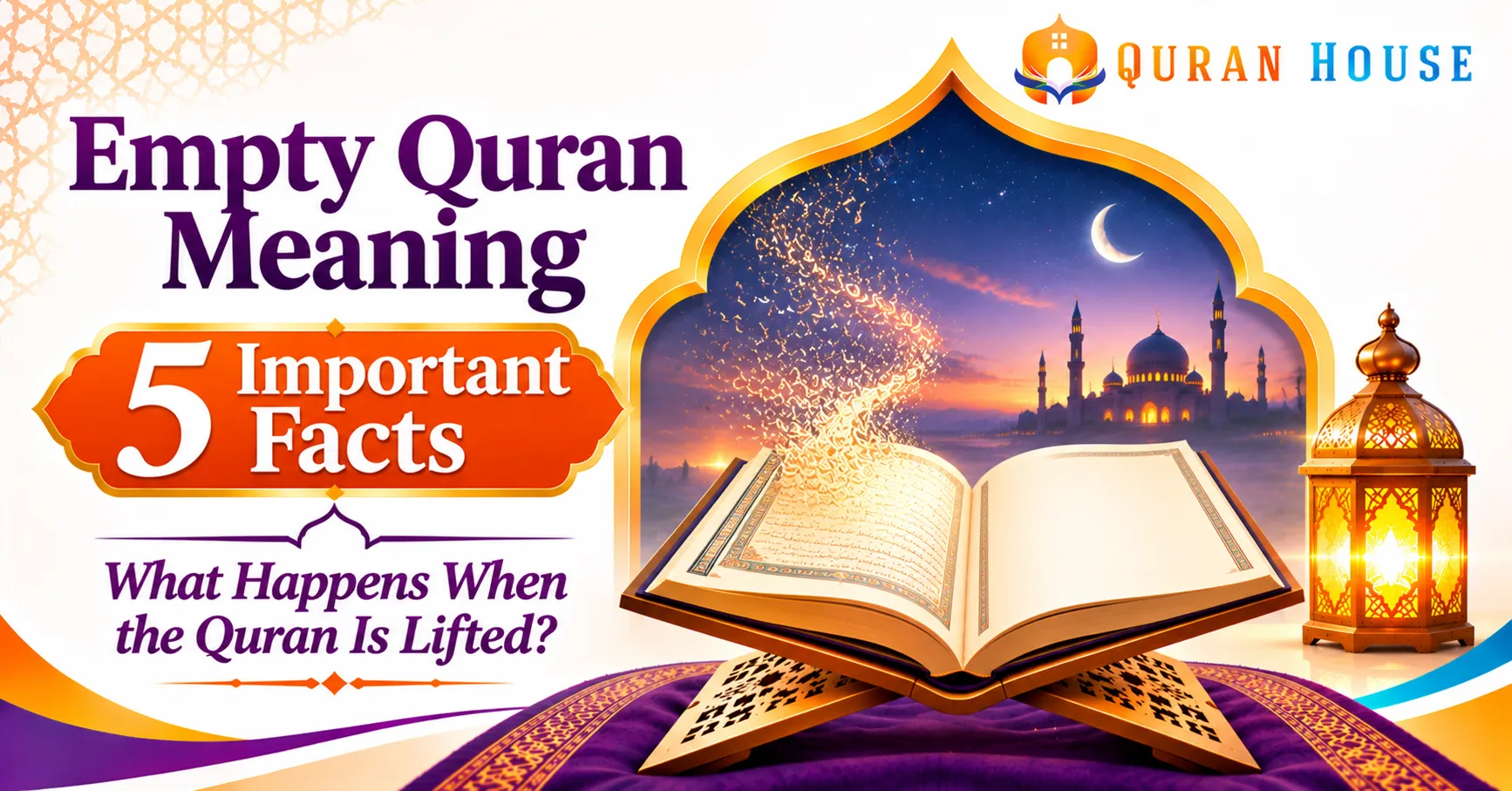
The empty Quran meaning refers to a prophecy of the Prophet ﷺ: a time near the end of the world when the words of the Quran will be lifted from its pages and from the hearts of people in a single night.
For many Muslims, hearing that the Quran could one day become empty is shocking, and it raises questions about what this means and when it will happen.
The Quran, revered as the literal word of Allah, holds a central position in the lives of over a billion Muslims worldwide. It is not just a book, but a comprehensive guide for life, encompassing spiritual, moral, and legal dimensions. Imagining its pages empty prompts deep reflection on the Quran’s significance and the void its absence would create.
In this guide, we go straight to 5 important facts about what happens if the Quran is empty, each based on the authentic hadith or the Quran itself.
After that, we look at how the Quran has been preserved since its revelation, what this event teaches us, and how the Quran lives on in the hearts of those who memorize it.
1. Empty Quran Means the Quran Will Be Lifted Near the End of Time
In Islam, the empty Quran refers to a real event the Prophet ﷺ foretold: near the end of time, Allah will lift the Quran from the earth, so that its pages become empty.
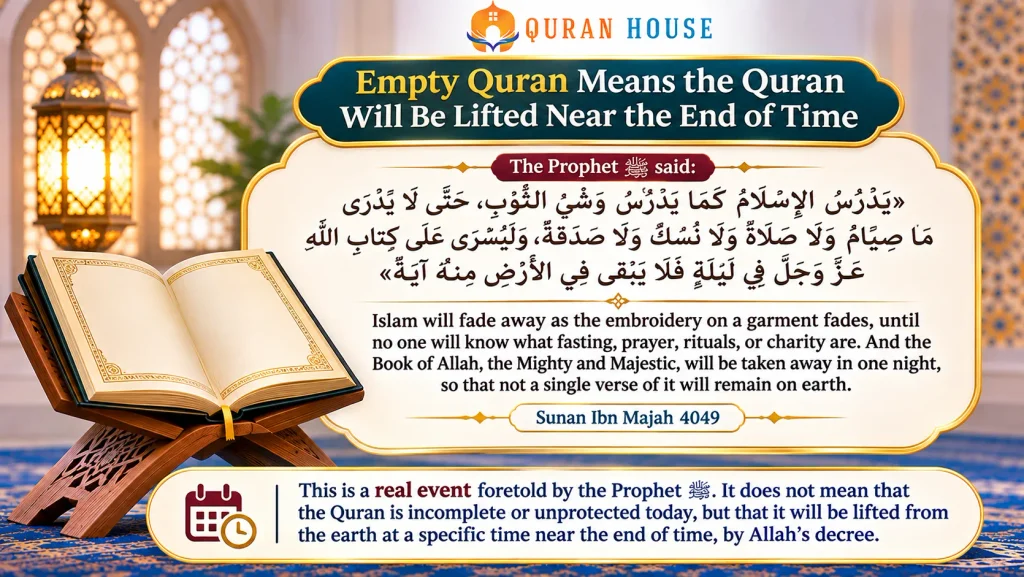
This is reported in an authentic hadith from Hudhayfah ibn Al-Yaman, who narrated that the Prophet ﷺ said:
«يَدْرُسُ الْإِسْلَامُ كَمَا يَدْرُسُ وَشْيُ الثَّوْبِ، حَتَّى لَا يُدْرَى مَا صِيَامٌ وَلَا صَلَاةٌ وَلَا نُسُكٌ وَلَا صَدَقَةٌ، وَلَيُسْرَى عَلَى كِتَابِ اللَّهِ عَزَّ وَجَلَّ فِي لَيْلَةٍ فَلَا يَبْقَى فِي الْأَرْضِ مِنْهُ آيَةٌ»
“Islam will fade away as the embroidery on a garment fades, until no one will know what fasting, prayer, rituals, or charity are. And the Book of Allah, the Mighty and Majestic, will be taken away in one night, so that not a single verse of it will remain on earth.”
Al-Albani graded this hadith authentic. It does not mean that the Quran is incomplete or unprotected today; it describes something that will happen at a specific time, decreed by Allah, at the very end of the world.
2. The Quran Will Disappear From Both the Pages and the Hearts in One Night
The hadith says that “not a single verse of it will remain on earth,” and scholars explain that this includes both the written copies and the memories of people. The words will vanish from every Mushaf, and even those who had memorized the Quran will wake up unable to recall it.
The hadith also describes this happening “in one night,” which shows how sudden it will be. There will be no gradual fading of the text; one night the Quran is still among people, and by the morning not a verse of it remains, in pages or in hearts.
3. It Will Happen Only After Knowledge of the Religion Has Faded
The same hadith explains what comes before the lifting of the Quran: Islam will fade “as the embroidery on a garment fades,” until people no longer know what prayer, fasting, rituals, or charity are. The lifting of the Quran comes at the end of a long decline, not suddenly in a time of strong faith.
This teaches that the Quran will only be raised from a world that has already turned away from it. As long as Muslims recite it, learn it, and act on it, the Quran remains alive among them, which is a strong reminder of the responsibility we carry toward it today.
4. Until That Time, Allah Has Promised To Preserve the Quran
The prophecy of the empty Quran does not contradict the preservation of the Quran; it confirms that only Allah decides when it will be raised. Until then, He has promised to protect it Himself:
﴿إِنَّا نَحْنُ نَزَّلْنَا الذِّكْرَ وَإِنَّا لَهُ لَحَافِظُونَ﴾
“Indeed, it is We who sent down the Quran, and indeed, We will be its guardian.”
This promise is why the Quran has reached us unchanged for over 1,400 years, through careful writing, precise recitation, and millions of people who memorize it in every generation. No human effort can remove the Quran before its time, and no one can change a single letter of it.
5. The Lifting of the Quran Is One of the Signs of the Hour
The lifting of the Quran is one of the signs of the end of time, and scholars mention it among the events that come very close to the Hour. It signals a time of immense moral decay and spiritual darkness, when humanity will have distanced itself from divine guidance.
Like all the signs of the Hour, knowing about it is not meant to make believers anxious about dates, which only Allah knows. Its purpose is to remind us of the value of the Quran while it is still with us, and to push us to read it, understand it, and live by it today.
Inside an Interactive One-on-One Session
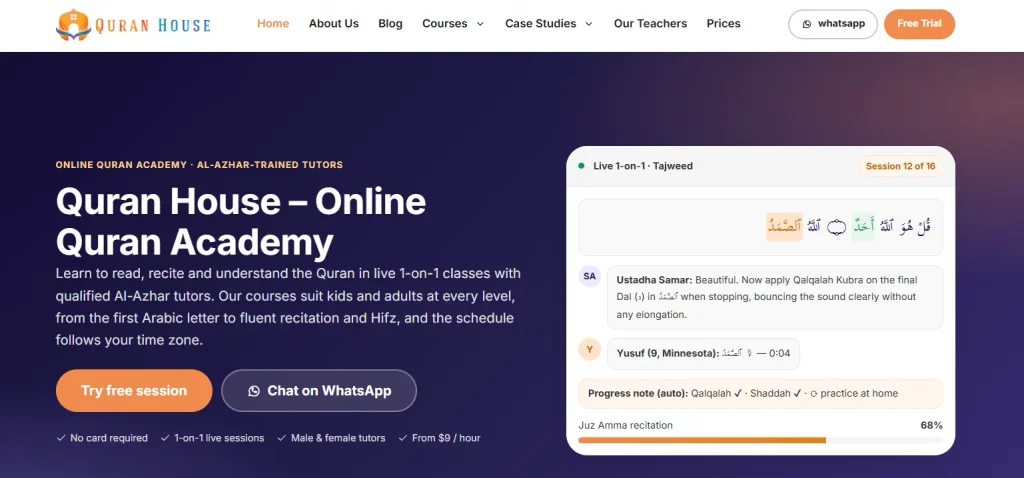
Every class is live and personal. See how our tutor uses on-screen tools, quick reviews, and gentle correction to help a student build confidence with every new word.
Start Your Quran Journey With Quran House
Learn live and one-on-one with Al-Azhar-trained tutors, male and female, for children and adults, at a time that fits your timezone.
Try a Free SessionWhy the Quran Matters So Much to Muslims?
The Quran is more than a sacred scripture for Muslims; it is the ultimate source of guidance, providing answers to life’s most profound questions and offering solace in times of need. Its verses, known as Ayahs, are considered signs of Allah’s wisdom and mercy. The Quran:
- Serves as a Guide: directing believers on how to lead righteous lives.
- Strengthens Faith: offering stories of past prophets and their communities.
- Provides a Legal and Moral Framework: laying down laws and ethical guidelines.
- Connects Generations: being recited and memorized by millions, creating a bond between generations of Muslims.
Imagining the Quran empty is also a thought experiment that challenges believers to reflect on their relationship with it. How would believers feel without its comforting verses? What would replace the guidance and wisdom it provides? How would Islamic practices survive without their Quranic foundation?
| Aspect | Implication |
|---|---|
| Guidance | Without the Quran, Muslims would lack the primary source of spiritual direction. |
| Tradition | Many rituals, from daily prayers to annual celebrations, are rooted in Quranic teachings. |
| Identity | The Quran plays a pivotal role in shaping Muslim identity, both individually and collectively. |
Historical and Cultural Context
Since its revelation over 1,400 years ago, the Quran has been meticulously preserved, both in written form and in the hearts of countless believers. Its preservation is not just a matter of historical record but is also a testament to its divine origin and the unwavering commitment of the Muslim community.
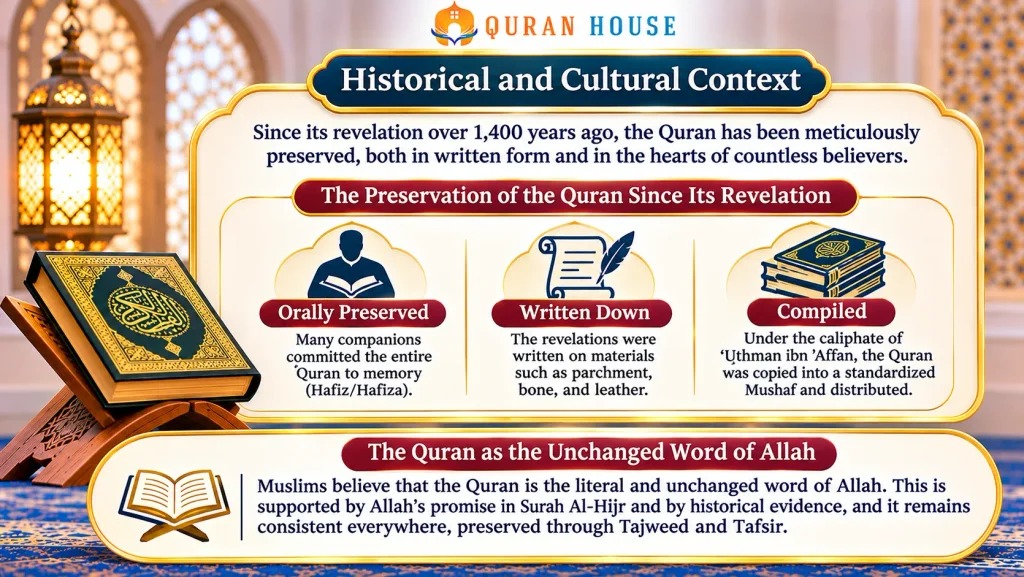
The Preservation of the Quran Since Its Revelation
The process of preserving the Quran began during the lifetime of the Prophet Muhammad ﷺ. The divine revelations were:
- Orally Preserved: many companions of the Prophet ﷺ committed the entire Quran to memory. These individuals, known as Hafiz or Hafiza, played a pivotal role in ensuring the Quran’s oral transmission across generations.
- Written Down: alongside oral preservation, the revelations were written on various materials, such as parchment, bone, and leather, by scribes appointed by the Prophet ﷺ.
- Compiled: under the caliphate of ’Uthman ibn ’Affan, the written Quran was copied into a standardized Mushaf, which was then replicated and distributed across the expanding Muslim world.
The Quran as the Unchanged Word of Allah
Muslims believe that the Quran is the literal and unchanged word of Allah. This belief is rooted in both divine assurance, the promise in Surah Al-Hijr explained in fact 4, and historical evidence.
This is why the Quran remains consistent wherever one travels in the Muslim world, from the recitations in mosques to the copies found in homes. The sciences of Tajweed (correct pronunciation) and Tafsir (exegesis) further ensure that the Quran is recited and understood in the manner it was revealed, and our online Tajweed classes carry on this tradition of precise recitation.
Major Signs of the Day of Judgment (DoJ)
The Day of Judgment, known as Yawm Al-Qiyamah in Arabic, is a fundamental belief in Islam. It is the day when all beings will be resurrected and held accountable for their deeds. Leading up to this monumental event, there are various signs, categorized as major and minor, that the Prophet ﷺ foretold.
The Concept of Major and Minor Signs
Islamic eschatology details a series of events that will unfold as the end of time approaches:
- Minor Signs: events or changes, some of which have already occurred, while others are yet to happen. Examples include the sending of the Prophet Muhammad ﷺ himself and the spread of moral decay in societies.
- Major Signs: significant, transformative events that will herald the imminent arrival of the Day of Judgment. They include the appearance of the Dajjal (Antichrist), the descent of Jesus, peace be upon him, the emergence of Gog and Magog, and the rising of the sun from the west.
What Does the Disappearance of the Quran Mean for Muslims?
Islamic narrations describe the removal of the Quran from written pages and people’s hearts near the end of time. Reflecting on this event reminds Muslims of the importance of preserving Quranic knowledge, following its teachings, and maintaining a strong connection with Allah. The following reflections explore the spiritual significance of losing access to Quranic guidance.
The Symbolic Meaning of an Empty Mushaf
The idea of an empty Mushaf can serve as a reminder of the Quran’s importance in the lives of Muslims. Although these symbolic meanings are reflections rather than established interpretations of the narrations, they highlight several important lessons:
- Loss of Connection with Divine Guidance: The Quran is a primary source of guidance for Muslims, helping them strengthen their relationship with Allah. An empty Mushaf can symbolize the loss of access to this guidance and the spiritual distance that may follow.
- Moral and Spiritual Emptiness: The Quran teaches principles of justice, compassion, honesty, and responsibility. Its disappearance can serve as a reminder of the importance of preserving these values and applying them in daily life.
- The Temporary Nature of Worldly Life: Reflecting on the removal of the Quran can also remind believers that worldly conditions are temporary. This encourages Muslims to prioritize their relationship with Allah and prepare for the Hereafter.
Spiritual Implications of Losing Quranic Guidance
The Quran provides essential guidance on faith, worship, personal conduct, and moral responsibility. Reflecting on a world without access to its teachings highlights the importance of learning and practicing the Quran while its guidance remains available.
Several potential spiritual consequences can be considered:
- Loss of Spiritual Direction: The Quran explains the purpose of human existence and encourages believers to worship Allah. Without access to its guidance, people may struggle to maintain a clear understanding of their spiritual responsibilities.
- Weakening of Religious Practices: The Quran establishes fundamental acts of worship, including Salah, fasting, and Hajj, while the Sunnah explains their practical details. Losing access to Quranic guidance could weaken people’s understanding and practice of these obligations.
- Decline in Moral Awareness: Quranic teachings emphasize justice, mercy, truthfulness, and accountability. Without continued learning and application of these principles, individuals and communities may become less attentive to their moral responsibilities.
These reflections are intended to highlight the value of Quranic guidance rather than establish specific events or consequences beyond what is authentically reported in Islamic sources.
How Is the Quran Preserved Through Memorization?
The Quran has been preserved not only in written form but also through memorization by generations of Muslims. This tradition, known as Hifz, has played an essential role in transmitting the Quran from the time of Prophet Muhammad ﷺ to the present day.
The empty Quran meaning refers to a prophecy of the Prophet ﷺ: a time near the end of the world when the words of the Quran will be lifted from its pages and from the hearts of people in a single night. For many Muslims, hearing that the Quran could one day become empty is shocking, and it raises questions about what this means and when it will happen.
The Quran, revered as the literal word of Allah, holds a central position in the lives of over a billion Muslims worldwide. It is not just a book, but a comprehensive guide for life, encompassing spiritual, moral, and legal dimensions. Imagining its pages empty prompts deep reflection on the Quran’s significance and the void its absence would create.
In this guide, we go straight to 5 important facts about what happens if the Quran is empty, each based on the authentic hadith or the Quran itself. After that, we look at how the Quran has been preserved since its revelation, what this event teaches us, and how the Quran lives on in the hearts of those who memorize it.
1. Empty Quran Means the Quran Will Be Lifted Near the End of Time
In Islam, the empty Quran refers to a real event the Prophet ﷺ foretold: near the end of time, Allah will lift the Quran from the earth, so that its pages become empty.
This is reported in an authentic hadith from Hudhayfah ibn Al-Yaman, who narrated that the Prophet ﷺ said:
«يَدْرُسُ الْإِسْلَامُ كَمَا يَدْرُسُ وَشْيُ الثَّوْبِ، حَتَّى لَا يُدْرَى مَا صِيَامٌ وَلَا صَلَاةٌ وَلَا نُسُكٌ وَلَا صَدَقَةٌ، وَلَيُسْرَى عَلَى كِتَابِ اللَّهِ عَزَّ وَجَلَّ فِي لَيْلَةٍ فَلَا يَبْقَى فِي الْأَرْضِ مِنْهُ آيَةٌ»
“Islam will fade away as the embroidery on a garment fades, until no one will know what fasting, prayer, rituals, or charity are. And the Book of Allah, the Mighty and Majestic, will be taken away in one night, so that not a single verse of it will remain on earth.”
Al-Albani graded this hadith authentic. It does not mean that the Quran is incomplete or unprotected today; it describes something that will happen at a specific time, decreed by Allah, at the very end of the world.
2. The Quran Will Disappear From Both the Pages and the Hearts in One Night
The hadith says that “not a single verse of it will remain on earth,” and scholars explain that this includes both the written copies and the memories of people. The words will vanish from every Mushaf, and even those who had memorized the Quran will wake up unable to recall it.
The hadith also describes this happening “in one night,” which shows how sudden it will be. There will be no gradual fading of the text; one night the Quran is still among people, and by the morning not a verse of it remains, in pages or in hearts.
3. It Will Happen Only After Knowledge of the Religion Has Faded
The same hadith explains what comes before the lifting of the Quran: Islam will fade “as the embroidery on a garment fades,” until people no longer know what prayer, fasting, rituals, or charity are. The lifting of the Quran comes at the end of a long decline, not suddenly in a time of strong faith.
This teaches that the Quran will only be raised from a world that has already turned away from it. As long as Muslims recite it, learn it, and act on it, the Quran remains alive among them, which is a strong reminder of the responsibility we carry toward it today.
4. Until That Time, Allah Has Promised To Preserve the Quran
The prophecy of the empty Quran does not contradict the preservation of the Quran; it confirms that only Allah decides when it will be raised. Until then, He has promised to protect it Himself:
﴿إِنَّا نَحْنُ نَزَّلْنَا الذِّكْرَ وَإِنَّا لَهُ لَحَافِظُونَ﴾
“Indeed, it is We who sent down the Quran, and indeed, We will be its guardian.”
This promise is why the Quran has reached us unchanged for over 1,400 years, through careful writing, precise recitation, and millions of people who memorize it in every generation. No human effort can remove the Quran before its time, and no one can change a single letter of it.
5. The Lifting of the Quran Is One of the Signs of the Hour
The lifting of the Quran is one of the signs of the end of time, and scholars mention it among the events that come very close to the Hour. It signals a time of immense moral decay and spiritual darkness, when humanity will have distanced itself from divine guidance.
Like all the signs of the Hour, knowing about it is not meant to make believers anxious about dates, which only Allah knows. Its purpose is to remind us of the value of the Quran while it is still with us, and to push us to read it, understand it, and live by it today.
Inside an Interactive One-on-One Session
Every class is live and personal. See how our tutor uses on-screen tools, quick reviews, and gentle correction to help a student build confidence with every new word.
Start Your Quran Journey With Quran House
Learn live and one-on-one with Al-Azhar-trained tutors, male and female, for children and adults, at a time that fits your timezone.
Try a Free SessionWhy the Quran Matters So Much to Muslims?
The Quran is more than a sacred scripture for Muslims; it is the ultimate source of guidance, providing answers to life’s most profound questions and offering solace in times of need. Its verses, known as Ayahs, are considered signs of Allah’s wisdom and mercy. The Quran:
- Serves as a Guide: directing believers on how to lead righteous lives.
- Strengthens Faith: offering stories of past prophets and their communities.
- Provides a Legal and Moral Framework: laying down laws and ethical guidelines.
- Connects Generations: being recited and memorized by millions, creating a bond between generations of Muslims.
Imagining the Quran empty is also a thought experiment that challenges believers to reflect on their relationship with it. How would believers feel without its comforting verses? What would replace the guidance and wisdom it provides? How would Islamic practices survive without their Quranic foundation?
| Aspect | Implication |
|---|---|
| Guidance | Without the Quran, Muslims would lack the primary source of spiritual direction. |
| Tradition | Many rituals, from daily prayers to annual celebrations, are rooted in Quranic teachings. |
| Identity | The Quran plays a pivotal role in shaping Muslim identity, both individually and collectively. |
Historical and Cultural Context
Since its revelation over 1,400 years ago, the Quran has been meticulously preserved, both in written form and in the hearts of countless believers. Its preservation is not just a matter of historical record but is also a testament to its divine origin and the unwavering commitment of the Muslim community.
The Preservation of the Quran Since Its Revelation
The process of preserving the Quran began during the lifetime of the Prophet Muhammad ﷺ. The divine revelations were:
- Orally Preserved: many companions of the Prophet ﷺ committed the entire Quran to memory. These individuals, known as Hafiz or Hafiza, played a pivotal role in ensuring the Quran’s oral transmission across generations.
- Written Down: alongside oral preservation, the revelations were written on various materials, such as parchment, bone, and leather, by scribes appointed by the Prophet ﷺ.
- Compiled: under the caliphate of ’Uthman ibn ’Affan, the written Quran was copied into a standardized Mushaf, which was then replicated and distributed across the expanding Muslim world.
The Quran as the Unchanged Word of Allah
Muslims believe that the Quran is the literal and unchanged word of Allah. This belief is rooted in both divine assurance, the promise in Surah Al-Hijr explained in fact 4, and historical evidence.
This is why the Quran remains consistent wherever one travels in the Muslim world, from the recitations in mosques to the copies found in homes. The sciences of Tajweed (correct pronunciation) and Tafsir (exegesis) further ensure that the Quran is recited and understood in the manner it was revealed, and our online Tajweed classes carry on this tradition of precise recitation.
Major Signs of the Day of Judgment (DoJ)
The Day of Judgment, known as Yawm Al-Qiyamah in Arabic, is a fundamental belief in Islam. It is the day when all beings will be resurrected and held accountable for their deeds. Leading up to this monumental event, there are various signs, categorized as major and minor, that the Prophet ﷺ foretold.
The Concept of Major and Minor Signs
Islamic eschatology details a series of events that will unfold as the end of time approaches:
- Minor Signs: events or changes, some of which have already occurred, while others are yet to happen. Examples include the sending of the Prophet Muhammad ﷺ himself and the spread of moral decay in societies.
- Major Signs: significant, transformative events that will herald the imminent arrival of the Day of Judgment. They include the appearance of the Dajjal (Antichrist), the descent of Jesus, peace be upon him, the emergence of Gog and Magog, and the rising of the sun from the west.
What Does the Disappearance of the Quran Mean for Muslims?
Islamic narrations describe the removal of the Quran from written pages and people’s hearts near the end of time. Reflecting on this event reminds Muslims of the importance of preserving Quranic knowledge, following its teachings, and maintaining a strong connection with Allah. The following reflections explore the spiritual significance of losing access to Quranic guidance.
The Symbolic Meaning of an Empty Mushaf
The idea of an empty Mushaf can serve as a reminder of the Quran’s importance in the lives of Muslims. Although these symbolic meanings are reflections rather than established interpretations of the narrations, they highlight several important lessons:
- Loss of Connection with Divine Guidance: The Quran is a primary source of guidance for Muslims, helping them strengthen their relationship with Allah. An empty Mushaf can symbolize the loss of access to this guidance and the spiritual distance that may follow.
- Moral and Spiritual Emptiness: The Quran teaches principles of justice, compassion, honesty, and responsibility. Its disappearance can serve as a reminder of the importance of preserving these values and applying them in daily life.
- The Temporary Nature of Worldly Life: Reflecting on the removal of the Quran can also remind believers that worldly conditions are temporary. This encourages Muslims to prioritize their relationship with Allah and prepare for the Hereafter.
Spiritual Implications of Losing Quranic Guidance
The Quran provides essential guidance on faith, worship, personal conduct, and moral responsibility. Reflecting on a world without access to its teachings highlights the importance of learning and practicing the Quran while its guidance remains available.
Several potential spiritual consequences can be considered:
- Loss of Spiritual Direction: The Quran explains the purpose of human existence and encourages believers to worship Allah. Without access to its guidance, people may struggle to maintain a clear understanding of their spiritual responsibilities.
- Weakening of Religious Practices: The Quran establishes fundamental acts of worship, including Salah, fasting, and Hajj, while the Sunnah explains their practical details. Losing access to Quranic guidance could weaken people’s understanding and practice of these obligations.
- Decline in Moral Awareness: Quranic teachings emphasize justice, mercy, truthfulness, and accountability. Without continued learning and application of these principles, individuals and communities may become less attentive to their moral responsibilities.
These reflections are intended to highlight the value of Quranic guidance rather than establish specific events or consequences beyond what is authentically reported in Islamic sources.
How Is the Quran Preserved Through Memorization?
The Quran has been preserved not only in written form but also through memorization by generations of Muslims. This tradition, known as Hifz, has played an essential role in transmitting the Quran from the time of Prophet Muhammad ﷺ to the present day.
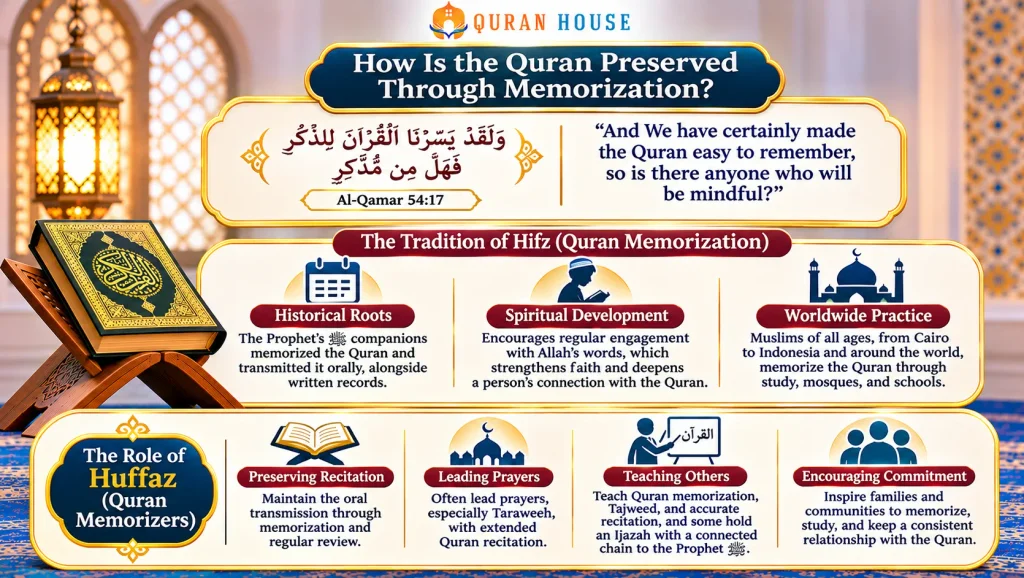
Allah says in the Quran:
﴿وَلَقَدْ يَسَّرْنَا الْقُرْآنَ لِلذِّكْرِ فَهَلْ مِن مُّدَّكِرٍ﴾
“And We have certainly made the Quran easy to remember, so is there anyone who will be mindful?”
This verse highlights the accessibility of the Quran for remembrance and reflection. Across generations, Muslims of different ages and backgrounds have memorized the Quran, making Hifz an important part of Islamic education and the preservation of Quranic recitation.
The Tradition of Hifz and Quran Memorization
Hifz, or memorizing the Quran, is a longstanding and highly respected practice in the Muslim community. It involves more than remembering words, as learners are also encouraged to recite accurately, understand the meanings, and reflect on Allah’s guidance.
Several aspects distinguish this tradition:
- Historical Roots: Since the time of Prophet Muhammad ﷺ, his companions memorized Quranic revelations and transmitted them orally alongside written records, contributing to the preservation of the Quran.
- Spiritual Development: Memorizing the Quran encourages regular engagement with Allah’s words. When combined with understanding and reflection, Hifz can strengthen faith and deepen a person’s connection with the Quran.
- Worldwide Practice: From Cairo to Indonesia and across Muslim communities worldwide, children and adults dedicate time to memorizing the Quran through individual study, mosques, and educational institutions.
Memorizing even a portion of the Quran allows Muslims to recall and recite its verses without needing a printed Mushaf. Learners who practice recitation from memory may also wonder whether they can read the Quran in their head and how silent reading differs from verbal recitation.
The Role of Huffaz in Preserving the Quran
A Hafiz (male) or Hafiza (female) is someone who has memorized the entire Quran. The plural term Huffaz refers to Quran memorizers who contribute to preserving and transmitting its recitation across generations.
Their role extends beyond memorization and includes several important responsibilities:
- Preserving Quranic Recitation: Huffaz help maintain the oral transmission of the Quran by memorizing its verses and reviewing them regularly. Their knowledge complements the preservation of the Quran in written Mushafs.
- Leading Congregational Prayers: Many Huffaz lead prayers, particularly Taraweeh during Ramadan, when extended portions of the Quran are recited and some communities complete its recitation throughout the month.
- Teaching Future Generations: Qualified Huffaz teach Quran memorization, Tajweed, and accurate recitation to new learners. Some hold an Ijazah with a connected chain of transmission reaching back to Prophet Muhammad ﷺ, as explained through our Ijazah-certified Quran teachers.
- Encouraging Commitment to the Quran: Having a Hafiz in a family or community can inspire others to memorize, study, and maintain a consistent relationship with the Quran.
Through memorization, regular revision, and teaching, Huffaz contribute to the continued transmission of Quranic recitation. Their efforts demonstrate the importance of preserving the Quran through both written documentation and oral learning.
How the Quran Is Preserved Today?
Today, the Quran is preserved more widely than at any time in history, which is a clear answer to anyone who worries that it could be lost or changed before the time Allah has decreed:
- Digital Copies: the Quran is available in many digital formats, from PDFs to mobile apps, ensuring easy access across different platforms.
- Online Learning Platforms: websites and apps offer Quran lessons, Tajweed tutorials, and Tafsir sessions, making learning accessible to a global audience.
- Virtual Communities: online platforms allow Muslims around the world to learn and discuss the Quran’s teachings together.
- Preservation of Manuscripts: technologies such as digital archiving are used to preserve ancient Quranic manuscripts for future generations.
| Aspect | Modern Influence |
|---|---|
| Access | Digital platforms make the Quran available to anyone, anywhere. |
| Learning | Online classes bring Quran education to every home. |
| Discussion | Virtual communities connect learners around the world. |
| Preservation | Technology helps preserve both the text and historical manuscripts. |
Learning Through Play: A Live Kids Class
Young learners stay focused when lessons feel like a game. Watch a real Quran House class where interactive activities and a patient tutor keep a child engaged, reciting, and smiling from start to finish.
Start Your Quran Journey With Quran House
Learn live and one-on-one with Al-Azhar-trained tutors, male and female, for children and adults, at a time that fits your timezone.
Try a Free SessionKeep the Quran Alive in Your Heart With Quran House
The hadith about the Quran being lifted is a reminder that our connection with it should never be taken for granted. The best response is to keep the Quran alive in our own lives today: reciting it correctly, understanding its meanings, and memorizing as much of it as we can.
At Quran House, our Al-Azhar-trained tutors teach in live one-to-one sessions, helping you recite with correct Tajweed and understand what you read. If you want to carry the Quran in your heart, our Hifz courses give you a structured memorization plan with a dedicated teacher, for adults and kids alike.
Whether you are starting with short surahs or aiming to memorize the whole Quran, you will have a trusted teacher by your side at every step.
Explore Our Quran Courses:
- Quran Reading Course Online for Kids and Adults
- Learn to Read Quran in Arabic
- Learn to Read Quran for Beginners
- Quran Reading for Kids
- Quran Reading for Adults
- Quran Reading for Sisters
- Noorani Qaida for Beginners
- Noorani Qaida for Adults
- Noor Al-Bayan Course
- Online Quran Classes for Men and Brothers
Conclusion
The empty Quran meaning is connected to Islamic narrations describing the Quran being lifted from written pages and people’s hearts near the end of time. These accounts remind Muslims of the importance of preserving Allah’s words through memorization, recitation, and teaching.
The main lesson of this prophecy is to appreciate the Quran while its guidance remains accessible. Muslims are encouraged to read its verses regularly, understand their meanings, and apply its teachings in their daily lives.
Strengthening our connection with the Quran requires consistent learning and reflection. Reading a few verses daily, using reliable sources such as Quran.com, and learning from qualified teachers can help us benefit from its guidance and share it with future generations.
FAQs
What Does Empty Quran Mean?
It refers to the authentic prophecy that, near the end of time, the Quran will be lifted from its pages and from people’s hearts in one night (Sunan Ibn Majah 4049).
When Will the Quran Become Empty?
It will happen at the very end of time, after knowledge of the religion has faded among people, and only Allah knows when.
Can the Quran Be Lost or Changed Today?
No, Allah promised to preserve the Quran, and it is protected in millions of copies and in the hearts of millions of Huffaz until the time He decides to raise it.
Is the Lifting of the Quran a Sign of the Day of Judgment?
Yes, it is one of the signs of the end of time, and scholars mention it among the events that come very close to the Hour.
How Long Does It Take To Memorize the Quran?
It depends on your daily time and level, and our guide on how long it takes to memorize the Quran helps you set a realistic plan.