The difference between Hafs and Warsh Quran is one of the most frequently asked questions among Muslims beginning their Quran learning journey. Many learners notice that skilled reciters sometimes pronounce certain words differently, apply different Tajweed rules, or vary the length of vowel sounds. This often leads to the misconception that there are different versions of the Quran.
In reality, there is only one Quran revealed by Allah to the Prophet Muhammad ﷺ. Hafs and Warsh are two authentic narrations transmitted through reliable chains of narration, preserving the same divine revelation without altering its message, beliefs, or rulings. The differences relate only to pronunciation, recitation techniques, and a small number of linguistic variations accepted within the science of Qira’at. Understanding these authentic recitations helps Muslims appreciate the remarkable preservation of the Quran and the precision of Islamic scholarship.
In this guide, you will learn the Difference Between Hafs and Warsh Quran, discover why these recitations exist, and understand how to choose the most suitable narration for your studies. Quran House Academy also offers expert online instruction to help students master authentic Quran recitation with confidence.
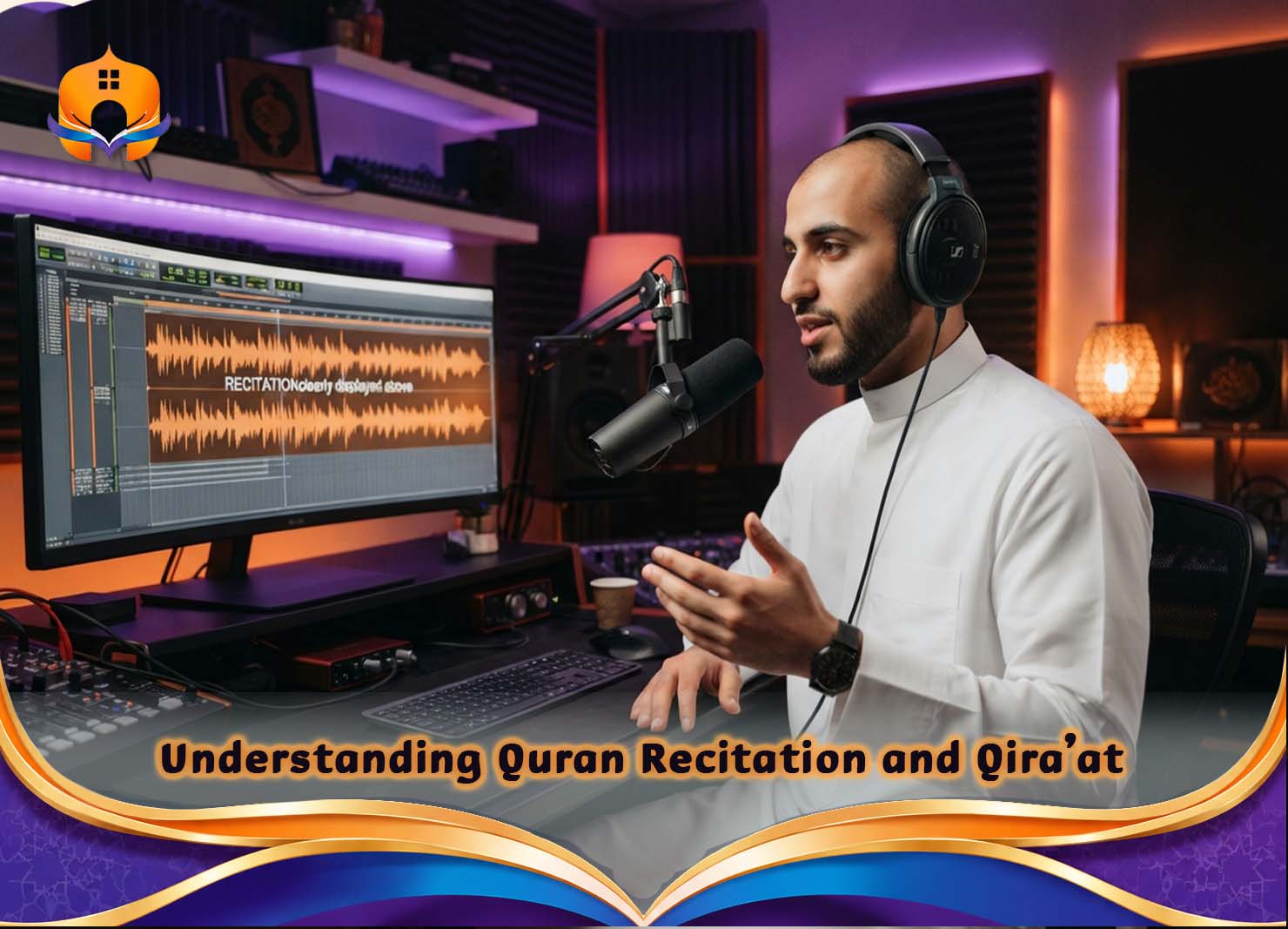
Understanding Quran Recitation and Qira’at

Online Quran Tutor
Before exploring the Difference Between Hafs and Warsh Quran, it is essential to understand what the science of Qira’at actually means.
The Arabic word Qira’at (القراءات) refers to the authentic methods of reciting the Quran that were taught directly by the Prophet Muhammad ﷺ. These recitations were neither invented by scholars nor developed by different Islamic groups. Instead, they were transmitted through continuous chains of trustworthy teachers who carefully preserved every aspect of pronunciation.
When the Quran was revealed, Arabia consisted of numerous tribes with different dialects and speaking styles. Allah, in His wisdom and mercy, allowed the Quran to be recited according to several authentic modes that made memorization and pronunciation easier for these tribes while preserving exactly the same revelation.
This flexibility never changed the beliefs, commandments, stories, or guidance contained in the Quran. Rather, it reflected the linguistic richness of classical Arabic and the ease that Allah intended for His servants.
The Companions learned these recitations directly from the Prophet ﷺ. They then passed them to their students, who transmitted them to later generations with remarkable precision. Over time, Muslim scholars carefully documented every accepted narration, ensuring that only authentic recitations continued to be taught.
Today, the recognized Qira’at remain among the greatest proofs of how carefully the Quran has been preserved throughout history.
Start Your Quran Learning Journey Today
Begin your Quran learning journey with confidence through structured lessons specially designed for beginners. Whether your aim is to improve pronunciation, master Tajweed rules, or learn to read the Quran step by step, Quran House Academy provides clear guidance in a simple and flexible learning environment.
With experienced tutors, personalized one-on-one sessions, and patient teaching methods, learners of all ages can build strong Quran reading skills from the comfort of their homes. The program is designed to support steady progress, ensuring that each student learns at their own pace without pressure.
Start today and take the first step toward accurate, fluent, and confident Quran recitation through a system built for long-term improvement and lasting success.

Difference Between Hafs and Warsh Quran
How Were the Authentic Qira’at Preserved?
Unlike ordinary books, the Quran has always been preserved through two complementary methods:
- Written manuscripts.
- Oral transmission.
Although written copies of the Quran were compiled during the era of Caliph Uthman ibn Affan (RA), oral recitation remained the primary method of preservation. Students learned directly from qualified teachers, who corrected every pronunciation until it matched the narration they had received.
This chain of learning, known as Isnad, continues even today. Qualified Quran teachers receive authorization (Ijazah) after demonstrating precise mastery of a particular recitation.
Because of this rigorous process, no authentic recitation can exist without fulfilling strict scholarly conditions.An accepted Quran recitation must:
- Possess an authentic chain of narration reaching the Prophet Muhammad ﷺ.
- Agree with the Uthmanic script of the Quran.
- Conform to classical Arabic grammar.
- Be accepted by recognized scholars of Qira’at.
These conditions explain why Muslims confidently accept both Hafs and Warsh as authentic methods of reciting the same Quran.
Why Were Multiple Authentic Recitations Allowed?
Many beginners ask why Allah permitted more than one authentic recitation if the Quran is one. Islamic scholars explain that the early Muslim community consisted of tribes speaking different dialects. Pronouncing certain words the same would have been difficult for many new Muslims.
Therefore, Allah granted flexibility in pronunciation while preserving the same divine revelation. This wisdom provided several benefits.
1. Making Quran Learning Easier
Different Arab tribes naturally pronounced some sounds differently. Authentic recitations accommodated these linguistic differences without changing Allah’s message. As a result, more people could memorize the Quran accurately..In addition, an online quran teacher provides personalized lessons that help students improve Quran recitation, Tajweed, and memorization from the comfort of home.
2. Preserving the Richness of Arabic
Arabic is one of the world’s richest languages. Some authentic recitations reveal subtle grammatical or linguistic variations that enrich the understanding of Quranic verses without creating contradictions. Scholars often study these variations to gain deeper insight into Quranic meanings.
3. Demonstrating Divine Preservation
Perhaps one of the greatest lessons behind the authentic Qira’at is the extraordinary preservation of the Quran. Instead of losing pronunciation details over time, Muslims preserved every accepted variation through continuous teaching. This meticulous preservation distinguishes the Quran from every other religious text.
What Is Hafs Recitation?
To fully understand the Difference Between Hafs and Warsh Quran, we first need to know who Hafs was. Hafs refers to Hafs ibn Sulayman, who transmitted the recitation of Imam Asim ibn Abi Al-Najud, one of the most respected scholars of Quran recitation.
Today, Hafs is the most widely used narration across the Muslim world. Millions of Muslims read the Quran according to Hafs every single day. Countries commonly using Hafs include:
- Saudi Arabia
- Egypt
- Jordan
- Syria
- Turkey
- Pakistan
- India
- Indonesia
- Malaysia
- Europe
- North America
- Australia
Most printed Mushafs, Quran applications, online learning platforms, and Islamic schools use Hafs because of its widespread historical adoption. This popularity makes it especially convenient for beginners. Students can easily find:
- Qualified teachers.
- Audio recitations.
- Tajweed lessons.
- Memorization resources.
- Educational videos.
However, its popularity should never be misunderstood as superiority over other authentic narrations. Hafs became widespread due to historical developments in education—not because other authentic recitations are less correct.
Characteristics of Hafs Recitation
Several characteristics distinguish Hafs from other narrations. These include:
- Clear pronunciation that many beginners find easy to follow.
- Extensive educational resources worldwide.
- Wide availability of printed Qurans.
- Consistent teaching in most international Islamic schools.
- Strong support through online learning platforms.
Because of these advantages, many students begin their Quran journey with Hafs before exploring additional Qira’at later.
What Is Warsh Recitation?
The Difference Between Hafs and Warsh Quran also requires understanding the background of Warsh. Warsh refers to Imam Warsh, whose full name was Uthman ibn Sa’id Al-Misri. He transmitted the recitation of Imam Nafi’ Al-Madani, one of the seven famous Imams of Quran recitation.
Warsh remains one of the most respected and authentic Quran narrations in Islamic history. Although less widespread globally than Hafs, it remains the primary recitation in many regions of Africa. Countries where Warsh is commonly taught include:
- Morocco
- Algeria
- Mauritania
- Libya
- Senegal
- Mali
- Niger
- Parts of Tunisia
- Several West African nations
Millions of Muslims memorize, recite, and teach the Quran according to Warsh every day. Just like Hafs, every pronunciation has been preserved through reliable scholarly chains reaching Prophet Muhammad ﷺ. Therefore, Muslims who recite according to Warsh are following an authentic prophetic tradition.
Characteristics of Warsh Recitation
Warsh possesses several distinctive features appreciated by Quran scholars. Among them are:
- Beautiful rhythmic pronunciation.
- Certain unique vowel patterns.
- Specific Madd rules.
- Characteristic Hamzah treatment.
- Occasional Imalah in selected words.
These features often sound unfamiliar to students accustomed only to Hafs. Nevertheless, every rule follows authentic scholarly transmission. Learning about Warsh allows Muslims to appreciate the remarkable precision with which Allah preserved His Book.
Why Should Beginners Learn About Hafs and Warsh?

Why Should Beginners Learn About Hafs and Warsh?
Many students assume they only need to memorize the Quran without understanding how to recite it. However, learning the foundations of Qira’at offers several important benefits.
- First, it removes unnecessary doubts.
- Second, it increases appreciation for Islamic scholarship.
- Third, it demonstrates the remarkable preservation of the Quran.
- Finally, it helps students understand why qualified reciters may sound different even when reciting the same revelation.
As students continue learning, this knowledge builds confidence and deepens their connection with the Quran.