
What is Izhar Mutlaq?
“Izhar Mutlaq” is a term from Tajwid, the art of reciting the Quran. It refers to a specific rule applied during recitation. This rule comes into play when a non-voweled “nun” (ن) encounters the Arabic letters ي (ya) or و (waw) within a word. In such instances, the “nun” should be pronounced clearly and distinctly. This clear pronunciation is essential to maintain the integrity and clarity of the Quranic recitation.
In the context of Tajwid, each rule serves to beautify and perfect the recitation, ensuring that each word and letter is articulated with its full rights and characteristics.
Izhar Mutlaq, like other Tajwid rules, contributes to the eloquence and precision of the Quranic recitation, a practice highly regarded in Islamic tradition.
Hint: Introduce your children to the art of Tajweed with engaging and interactive online Tajweed classes for kids. Lay the foundation for a lifelong connection with the Quran through beautiful recitation.
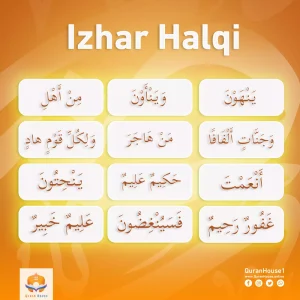
For learners who want to go further, take a look at our izhar halqi.
For more like this, take a look at our frequently asked questions.
Detailed Explanation of Izhar Mutlaq
Distinction from Other Tajwid Rules
Izhar Mutlaq, a rule in Tajwid (the art of Quranic recitation), stands distinct from other Tajwid rules in several ways:
- Rule Application: Izhar Mutlaq specifically involves the clear pronunciation of a non-voweled “nun” (ن) before the letters ي or و. This is different from rules like Idgham (merging) or Ikhfa (partial concealment), which involve different letter combinations and articulation strategies.
- Clarity of Pronunciation: Unlike some other rules that involve blending or subtle sound alterations, Izhar Mutlaq mandates a very clear and distinct pronunciation. There’s no alteration or merging of the “nun” sound with subsequent letters.
- Limited Scope: Its application is more restricted compared to other rules. Izhar Mutlaq applies only in specific letter encounters, making it a more straightforward rule with less variability than some other Tajwid rules.
Understanding these distinctions helps in mastering the nuances of Tajwid and ensuring accurate Quranic recitation.
Hint: Unlock the true beauty of Quranic recitation by enrolling in online Tajweed classes taught by native Arab instructors. Polish your recitation skills and receive valuable feedback to recite the Quran flawlessly.
Specific Rules and Pronunciation Techniques
The specific rules and pronunciation techniques for Izhar Mutlaq in Tajwid involve:
- Pronunciation of Non-voweled “Nun” (ن): When a non-voweled “nun” appears before the letters ي (Ya) or و (Waw), it must be pronounced clearly and distinctly.
- No Nasalization or Merging: Unlike in other Tajwid rules like Idgham or Ikhfa, the “nun” in Izhar Mutlaq is not nasalized or merged with the following letter. It retains its clear, distinct sound.
- Consistency Across Occurrences: This rule is consistently applied every time this letter combination occurs in the Quran, ensuring uniformity in recitation.
- Articulation Point: The “nun” should be pronounced with the tongue touching the roof of the mouth, just behind the front teeth, to ensure clarity.
These techniques emphasize the correct articulation and pronunciation, which are vital for the proper recitation of the Quran.
Izhar Mutlaq in the Quran
| Example from Quran | Arabic Text | Context/Explanation |
|---|---|---|
| Surah As-Saff, Ayat 4 | إِنَّ اللَّهَ يُحِبُّ الَّذِينَ يُقَاتِلُونَ فِي سَبِيلِهِ | Demonstrates clear pronunciation of “nun” before “ya” or “waw”. |
| Surah Al-Anaam, Ayat 99 | وَهُوَ الَّذِي أَنزَلَ مِنَ السَّمَاءِ مَاءً | Showcases the distinct articulation required by Izhar Mutlaq. |
| Surah Ar-Raad, Ayat 4 | وَمِنَ الْأَرْضِ مِثْلُهُنَّ | Another instance of distinct “nun” pronunciation, provides a different textual context for the application of Izhar Mutlaq. |
These examples illustrate how Izhar Mutlaq is applied in different contexts within the Quran, demonstrating the clear pronunciation of the “nun” sound when followed by the specific letters.
This articulation ensures the accurate and respectful recitation of the Quranic text.
Hint: Still Curious? Deepen your understanding of Izhar Halqi with detailed explanations and examples.