What is Izhar Halqi?
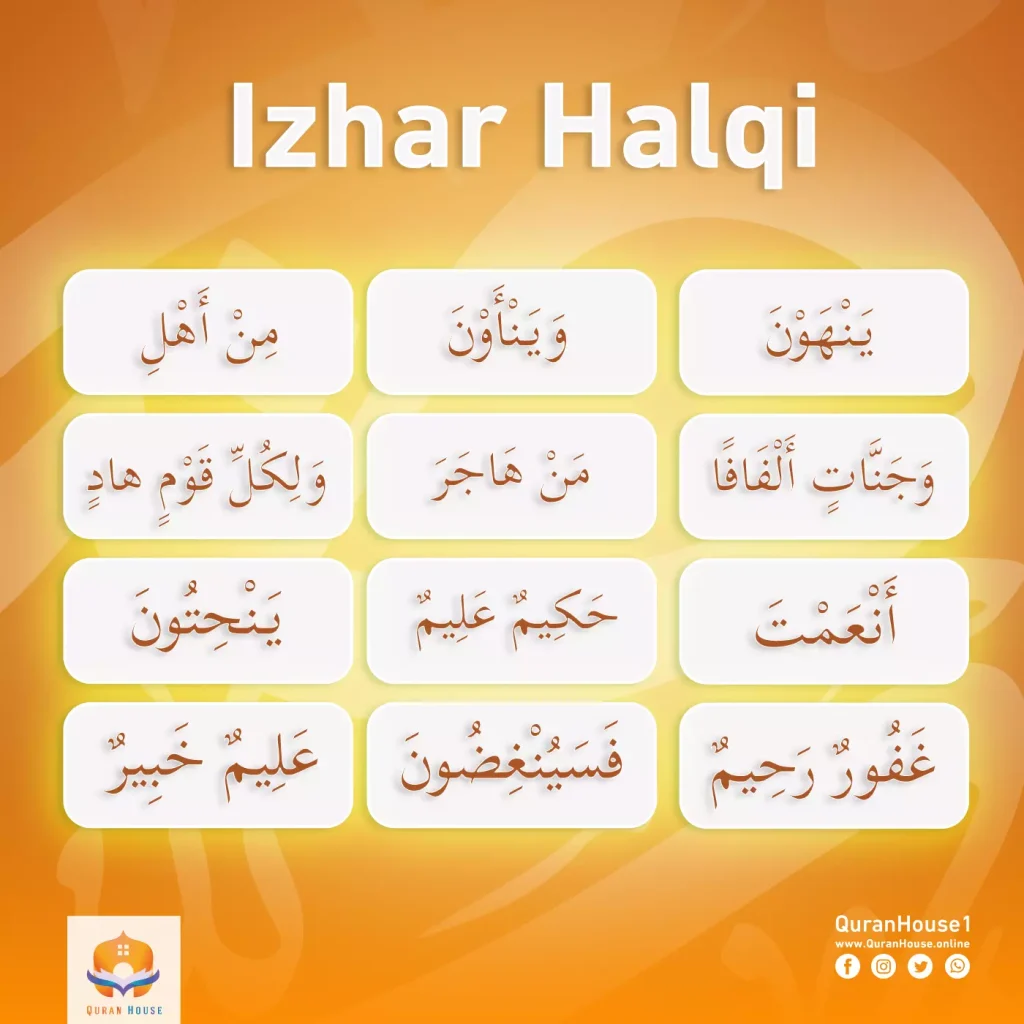
Izhar Halqi is a term derived from Arabic that is used in Tajweed, the art of Quranic recitation. The term “Izhar” translates to “clarity” or “manifestation,” and “Halqi” refers to the throat. Therefore, Izhar Halqi is the rule of Tajweed that emphasizes the clear and distinct pronunciation of certain letters that originate from the throat. These letters are known as “Halqi letters” and include خ (Kha), ح (Ha), ع (Ain), غ (Ghain), ه (Ha), and ح (Hamzah). The application of Izhar Halqi ensures that these letters are articulated clearly and accurately, without any undue merging with the sounds of adjacent letters.
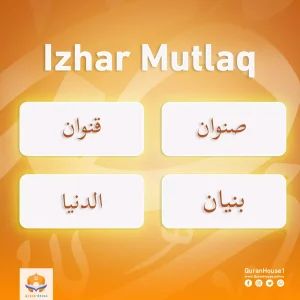
For learners who want to go further, take a look at our izhar mutlaq.
Importance in Tajweed and Quranic Recitation
Tajweed is the set of rules for the correct pronunciation of the letters with all its qualities and applying the various traditional methods of recitation. In Tajweed, every letter is given its right with the proper characteristics. Izhar Halqi is vital in Tajweed for several reasons:
- Preservation of the Quran: Izhar Halqi helps preserve the correct pronunciation of the Quran as it was revealed to Prophet Muhammad. Ensuring each letter is pronounced distinctly prevents the alteration of meaning.
- Beautification of Recitation: Applying Izhar Halqi enhances the beauty and eloquence of Quranic recitation, making the experience spiritually uplifting for both the reciter and the listener.
- Ease of Learning: For students of the Quran, understanding and applying the rules of Izhar Halqi is crucial in mastering Tajweed and becoming proficient in recitation.
Hint: Introduce your children to the art of Tajweed with engaging and interactive online Tajweed classes for kids. Lay the foundation for a lifelong connection with the Quran through beautiful recitation.
Table: The Halqi Letters and Their Articulation
| Letter | Name | Articulation Point | Example in Quranic Verses |
|---|---|---|---|
| خ | Kha | Upper throat | خَيْرٌ (Khayrun) |
| ح | Ha | Middle throat | حَمْد (Hamd) |
| ع | Ain | Middle throat | عَلِيم (Aleem) |
| غ | Ghain | Lower throat | غَفُور (Ghafoor) |
| ه | Ha | Farthest part of the throat | هُدًى (Huda) |
| ح | Hamzah | Closest part of the throat | أَحَد (Ahad) |
The Fundamentals of Izhar Halqi
Understanding Izhar Halqi requires a foundational knowledge of Tajweed, its linguistic aspects, and its practical implications in Quranic recitation.
Explanation of Tajweed
Tajweed, derived from the Arabic word for “proficiency” or “doing something well,” is the set of rules governing how the words of the Quran should be pronounced during recitation. Tajweed rules cover the pronunciation of letters, the intonation, and the rhythmic pattern of recitation. It’s a means to ensure that the recitation replicates the way Prophet Muhammad recited the Quran, preserving the words and meanings as they were revealed.
Definition and Linguistic Background of “Izhar Halqi”
“Izhar Halqi” specifically focuses on the clarity and distinct pronunciation of certain letters that originate from the throat. Breaking down the term:
- Izhar (إظهار): Literally means “to make clear” or “to manifest.” In the context of Tajweed, it refers to the clarity of pronunciation, ensuring that each letter’s sound is distinct and not obscured by adjacent letters.
- Halqi (حلقي): Pertains to the throat (Halq). The term indicates that the rule is about the letters articulated from the throat.
This rule mandates that when any of the throat letters (خ, ح, ع, غ, ه, and ح) appear after a Noon Sakin (نْ) or Tanween, they should be pronounced clearly and distinctly.
The Role of Izhar Halqi in Articulation and Clarity
Izhar Halqi’s primary role is to maintain the purity and clarity of the Quranic text during recitation. It serves several functions:
- Prevents Ambiguity: Clear articulation ensures that each word is understood as intended, preventing any misinterpretation or ambiguity in the meaning.
- Aesthetic Enhancement: The distinct pronunciation of letters beautifies the recitation, making it more pleasing and impactful to listeners.
- Facilitates Learning: For learners of Quranic recitation, mastering Izhar Halqi is a step towards achieving proficiency in Tajweed, making their recitation more accurate and spiritually fulfilling.
Practical Application
In practice, applying Izhar Halqi involves a conscious effort to emphasize the throat letters whenever they follow a Noon Sakin or Tanween. Reciters must familiarize themselves with the specific points of articulation in the throat and exercise to produce clear, distinct sounds. This practice is often supported by listening to skilled reciters and engaging in regular recitation exercises under the guidance of a knowledgeable teacher.
Hint: Unlock the true beauty of Quranic recitation by enrolling in online Tajweed classes taught by native Arab instructors. Polish your recitation skills and receive valuable feedback to recite the Quran flawlessly.
The Technical Aspects of Izhar Halqi
Izhar Halqi’s technicalities involve understanding the anatomy of the throat letters and the specific letters articulated from there. This section dives deep into the throat’s articulation zones and the critical letters in the Izhar Halqi rule.
| Throat Level | Letters | Description |
|---|---|---|
| Upper Throat | Ghain, Kha | Deep sounds requiring constriction in the upper throat |
| Middle Throat | Ain, Ha | Moderate sounds from the middle throat |
| Lower Throat | Ha, Hamzah | Gentle to sharp sounds from the part of the throat near mouth |
Detailed Description of the Throat Levels
The throat is divided into three parts, each responsible for the articulation of two of the six throat letters. Understanding these levels is crucial for proper pronunciation:
- Upper Throat (Aqsal Halq): The deepest part of the throat and the point of articulation for ‘Ghain (غ)’ and ‘Kha (خ)’. Pronouncing these letters involves a constriction in the upper throat.
- Middle Throat (Wasat Halq): The center part of the throat, where ‘Ain (ع)’ and ‘Ha (ح)’ are articulated. These letters require a moderate level of constriction in the middle throat.
- Lower Throat (Adnal Halq): The nearest part of the throat to the mouth, where ‘Ha (ه)’ and ‘Hamzah (ء)’ are articulated. These sounds are produced with minimal constriction and are closer to the oral cavity.
The Six Throat Letters Involved in Izhar Halqi
Each of the six letters has unique characteristics and requires specific articulation:
- Ha (ه): A gentle breathy sound produced from the lower throat.
- Hamzah (ء): A sharp, cutting sound also from the lower throat.
- Ain (ع): A deep, guttural sound from the middle throat.
- Ha (ح): A slightly harsher, whispery sound than ‘Ha’, produced from the middle throat.
- Ghain (غ): A voiced and deep sound from the upper throat.
- Kha (خ): A strong, breathy sound, much like a heavy version of the English “H,” from the upper throat.
Examples of Izhar Halqi in Quranic Verses
To understand how Izhar Halqi is applied, consider the following examples where the throat letters follow a Noon Sakin (نْ) or Tanween, and thus must be pronounced:
| Surah | Verse | Arabic Text | Transliteration | Throat Letter | Note on Pronunciation |
|---|---|---|---|---|---|
| Al-Fatiha | 1:4 | مَالِكِ يَوْمِ الدِّينِ | Maliki yawmi ad-deen | ك (Kaf) | ‘ك’ is pronounced clearly, demonstrating Izhar. |
| Al-Baqarah | 2:255 | اللَّهُ لاَ إِلَهَ إِلاَّ هُوَ | Allahu la ilaha illa huwa | ه (Ha) | ‘ه’ in “إِلاَّ” is pronounced with clarity, showing Izhar Halqi. |
| Al-Ikhlas | 112:1 | قُلْ هُوَ اللَّهُ أَحَدٌ | Qul huwa Allahu ahad | ح (Ha) | ‘ح’ in “أَحَدٌ” is articulated clearly, as required by Izhar Halqi. |
Practical Application of Izhar Halqi
Mastering Izhar Halqi involves practice, understanding common errors, and continuously refining pronunciation. Here is a practical guide to applying Izhar Halqi effectively in Quranic recitation.
Step-by-Step Guide on Pronouncing Izhar Halqi
- Understand the Throat Letters:
- Learn the six throat letters (خ, ح, ع, غ, ه, ح) and their points of articulation in the throat (upper, middle, and lower).
- Identify the Context:
- Recognize instances in the Quranic text where a Noon Sakin (نْ) or Tanween appears followed by one of the throat letters. This is where Izhar Halqi will be applied.
- Practice Individual Letters:
- Isolate each throat letter and practice pronouncing it, paying attention to the specific part of the throat it comes from.
- Combine with Noon Sakin or Tanween:
- Practice pronouncing the throat letter after a Noon Sakin or Tanween, ensuring clarity and distinction in sound.
- Recite with Correct Timing:
- Ensure that the elongation and timing are correct when applying Izhar Halqi, as overextension or hurried pronunciation can change the meaning.
Common Errors and Tips for Correct Pronunciation
- Merging Sounds:
- Error: Allowing the Noon Sakin or Tanween to blend into the throat letter.
- Tip: Focus on making a clear distinction between the nasal sound of the Noon and the throat letter that follows.
- Incorrect Articulation:
- Error: Not utilizing the correct part of the throat for each letter, leading to a mispronunciation.
- Tip: Regularly practice articulating each letter in isolation, focusing on the throat’s upper, middle, and lower parts.
- Inconsistent Application:
- Error: Applying Izhar Halqi inconsistently or overlooking it in faster recitation.
- Tip: Slow down and be mindful in recitation, ensuring that each instance of Izhar Halqi is observed.
Practice Exercises and Recommended Readings
- Letter Repetition:
- Practice repeating the six throat letters, focusing on the distinct sound and feeling in the throat.
- Word Practice:
- Choose Quranic verses that contain Izhar Halqi and recite them repeatedly, focusing on the clarity of the throat letters.
- Record and Compare:
- Record your recitation and compare it to skilled reciters, noting differences and areas for improvement.
Recommended Readings:
- Tajweed Books:
- Look for books dedicated to Tajweed rules, focusing on the chapters about Izhar Halqi.
- Online Resources:
- Access online courses or video tutorials that specifically teach Izhar Halqi and other Tajweed rules.
- Recitation Sessions:
- Participate in group recitation sessions or classes where you can receive feedback from a knowledgeable teacher.
The Significance of Izhar Halqi in Recitation
Izhar Halqi is not just a technical aspect of Tajweed; it holds profound spiritual and aesthetic significance in the recitation of the Quran. Understanding its importance helps reciters and listeners appreciate the beauty and precision in Quranic recitation.
The Spiritual and Recitational Importance of Proper Pronunciation
- Spiritual Connection:
- Proper pronunciation as dictated by Izhar Halqi is crucial for the spiritual aspect of recitation. It allows the reciter to connect deeply with the words of Allah as they were revealed to the Prophet Muhammad. This pronunciation accuracy is seen as a form of worship and reverence for the divine word.
- Preservation of Meaning:
- Each Arabic letter and sound has a specific meaning and purpose. Izhar Halqi ensures that the pronunciation does not alter the meaning of the words, maintaining the integrity and the message of the Quran as it has been passed down through generations.
The Impact of Izhar Halqi on the Beauty and Accuracy of Quranic Recitation
- Enhancement of Aesthetic Beauty:
- The clear articulation of throat letters makes the recitation more melodious and beautiful. Izhar Halqi contributes to the rhythm and harmony of the verses, enhancing the listener’s spiritual and emotional experience.
- Accuracy and Precision:
- Applying Izhar Halqi correctly ensures that each letter is given its due, reflecting a high level of precision and care in recitation. This accuracy is not only a matter of respect for the words of the Quran but also crucial for understanding and reflecting upon its meanings.
Comparison of the Six Throat Letters with Examples
This table illustrates the six throat letters involved in Izhar Halqi, their articulation points, and provides examples of their pronunciation in Quranic context.
| Letter | Articulation Point | Description | Example in Quranic Verses |
|---|---|---|---|
| خ (Kha) | Upper Throat | Strong, breathy sound | خَالِدُونَ (Khalidoon) |
| غ (Ghain) | Upper Throat | Voiced and deep sound | غَفُورٌ (Ghafoor) |
| ح (Ha) | Middle Throat | Slightly harsh, whispery sound | حَمِيدٌ (Hameed) |
| ع (Ain) | Middle Throat | Deep, guttural sound | عَلِيمٌ (Aleem) |
| ه (Ha) | Lower Throat | Gentle breathy sound | نَهَارٌ (Nahar) |
| ء (Hamzah) | Lower Throat | Sharp, cutting sound | أَحَدٌ (Ahad) |
Common Mistakes and Corrections in Izhar Halqi Pronunciation
This table outlines frequent errors made during the pronunciation of Izhar Halqi, with tips for correction to ensure clear and accurate recitation.
| Common Mistakes | Correction Tips |
|---|---|
| Blending the throat letter with preceding Noon Sakin or Tanween | Ensure a clear pause and separation between the nasal sound and the throat letter. |
| Incorrectly articulating the throat letters from the wrong part of the throat | Focus on the specific point of articulation for each letter and practice producing the sound from the correct part of the throat. |
| Overlooking the rule of Izhar Halqi in faster recitation | Slow down and consciously apply the rule in every applicable instance, regardless of recitation speed. |
| Not giving enough emphasis to the throat letter | Practice giving a slight emphasis to the throat letter following the Noon Sakin or Tanween to make its pronunciation distinct and clear. |
| Inconsistency in application across different instances | Regularly review and practice the rule of Izhar Halqi across various contexts and verses to develop a consistent application. |