Facts about Islam provide valuable insights into one of the world’s largest religions, helping people understand its beliefs, values, history, and way of life. Islam is not only a religion based on worship and rituals, but also a complete system that guides individuals in their spiritual, moral, social, and personal lives.
Millions of people search for reliable information about Islam to learn about its teachings and remove common misunderstandings. These facts about Islam help readers explore the core principles of the religion, including belief in one God, the role of prophets, the importance of the Quran, and the ethical values that shape Muslim communities around the world.
Islam teaches that human beings were created to worship Allah, live with justice, show kindness to others, and maintain a strong connection with their Creator. Through learning about Islam, people can gain a clearer understanding of the beliefs followed by more than one billion Muslims worldwide.
Quran House Academy provides structured Quran education that helps students learn about Islamic teachings, Quran recitation, and essential religious knowledge through qualified instruction and organized learning programs.
What Is Islam?
Islam is a monotheistic religion based on the belief in one God, known in Arabic as Allah. The word “Islam” means submission to the will of God, and it represents a way of life built on faith, obedience, peace, and righteousness.
Muslims believe that Islam is the final message from Allah revealed to humanity through a series of prophets. Among these prophets are Adam, Noah, Abraham, Moses, Jesus, and Muhammad ﷺ, peace be upon them all.
The Prophet Muhammad ﷺ received the Quran through revelation from Allah by the Angel Gabriel over a period of approximately twenty-three years. Muslims believe that Muhammad ﷺ is the final prophet and that the Quran is the preserved word of Allah.
One of the essential facts about Islam is that it is a universal religion that is not limited to a specific race, culture, or geographical region. Muslims live in almost every country in the world, and Islam encourages equality, respect, and cooperation among all people.
Start Your Quran Learning Journey Today
Begin your Quran learning journey with confidence through structured lessons specially designed for beginners. Whether you aim to improve pronunciation, master Tajweed rules, or learn to read the Quran step by step, Quran House Academy provides clear guidance in a simple and flexible learning environment.
With experienced tutors, personalized one-on-one sessions, and patient teaching methods, learners of all ages can build strong Quran reading skills from the comfort of their homes. The program is designed to support steady progress, ensuring that each student learns at their own pace without pressure. For more like this, take a look at our pricing.
Start today and take the first step toward accurate, fluent, and confident Quran recitation through a system built for long-term improvement and lasting success.
The Meaning of Islam and Muslim
The term “Muslim” refers to a person who submits to the will of Allah and follows the teachings of Islam. Being Muslim is not connected to a specific nationality or ethnicity. Anyone from any background can become Muslim by accepting the basic beliefs of Islam.
Islam teaches that all prophets delivered the same fundamental message: worship one God and live according to His guidance. Muslims respect all prophets and believe that they were chosen by Allah to guide humanity.
Another important fact about Islam is that Muslims believe Prophet Muhammad ﷺ did not introduce a completely new religion but completed the message that was delivered by earlier prophets.
The Five Pillars of Islam
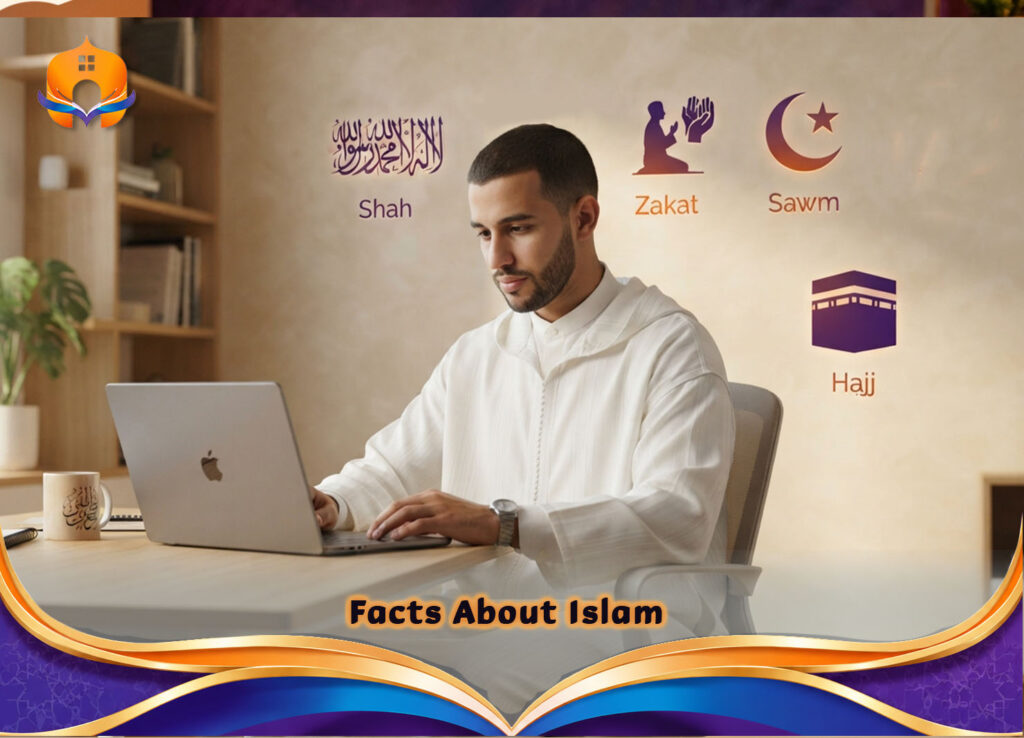
The foundation of Muslim practice is based on five essential acts of worship known as the Five Pillars of Islam. These pillars represent the practical side of faith and help Muslims strengthen their relationship with Allah.
1. Shahadah (Declaration of Faith)
The Shahadah is the statement of belief:
“There is no god except Allah, and Muhammad is the Messenger of Allah.”
This declaration represents the central belief of Islam: that Allah is the only One worthy of worship and that Prophet Muhammad ﷺ is His final messenger.
2. Salah (Daily Prayer)
Prayer is one of the most important acts of worship in Islam. Muslims perform five daily prayers facing the Kaaba in Mecca.
Prayer provides Muslims with a direct connection to Allah and reminds them throughout the day to remain grateful, disciplined, and spiritually focused.
3. Zakat (Charity)
Zakat is a form of obligatory charity that requires eligible Muslims to give a portion of their wealth to those in need.
This pillar reflects the Islamic values of generosity, social responsibility, and caring for vulnerable members of society.
4. Fasting During Ramadan
During the month of Ramadan, Muslims fast from dawn until sunset. Fasting teaches patience, self-control, gratitude, and compassion for people who experience hardship.
Ramadan is also a time for increased worship, Quran reading, reflection, and improving personal character.
5. Hajj (Pilgrimage to Mecca)
Hajj is the pilgrimage to the Kaaba in Mecca that every Muslim should perform at least once in their lifetime if they are physically and financially able.
Millions of Muslims from different countries gather during Hajj, demonstrating the unity and equality of Muslims regardless of their backgrounds. These events represent some of the important facts about Islam because they show how Islamic worship connects believers from different cultures and nations.
The Six Articles of Faith in Islam
In addition to the Five Pillars of Islam, Muslims believe in six fundamental articles of faith. These beliefs form the foundation of Islamic belief and explain how Muslims understand life, creation, and the relationship between humans and their Creator.
The six articles include:
- Belief in Allah.
- Belief in the angels.
- Belief in the revealed books.
- Belief in all prophets and messengers.
- Belief in the Day of Judgment.
- Belief in divine decree.
These beliefs teach Muslims that life has a purpose and that every person is responsible for their actions. Faith in Islam is not only a matter of words but also includes developing good character and treating others with kindness and fairness.
Among the significant facts about Islam is that belief and action are closely connected. Muslims believe that true faith should appear through honesty, patience, mercy, justice, and helping others.
The Quran: The Holy Book of Islam
The Quran is the sacred scripture of Islam. Muslims believe that it is the direct word of Allah revealed to Prophet Muhammad ﷺ through the Angel Gabriel.
The Quran contains guidance about worship, morality, family relationships, justice, compassion, and the purpose of human existence. Muslims recite verses from the Quran during their daily prayers, and many dedicate their lives to memorizing and studying its meanings.
The preservation of the Quran is considered one of the remarkable aspects of Islamic history. Millions of Muslims, known as Hafiz, memorize the entire Quran in Arabic, helping preserve its original text across generations.
Learning the Quran correctly requires proper pronunciation and understanding of Tajweed rules. Programs such as Quran House Academy help students improve their Quran reading skills and develop a stronger connection with Islamic teachings.
The Concept of Allah in Islam
One of the essential facts about Islam is the Islamic understanding of God. Muslims believe that Allah is the One and Only Creator of everything that exists. He has no partners, equals, or children, and He alone deserves worship.
The word “Allah” is the Arabic word for God. Arabic-speaking Christians and Jews also use the word Allah when referring to God. Therefore, the term does not represent a different deity but refers to the Creator in the Arabic language.
Muslims believe that Allah possesses perfect attributes, including mercy, wisdom, knowledge, forgiveness, and justice. The Quran describes Allah as extremely merciful while also teaching that people are accountable for their choices and actions.
The balance between hope and responsibility is an important part of Islamic belief. Muslims are encouraged to seek Allah’s mercy while also working to improve their character and behavior.
The Role of Prophets in Islam
Prophets have a central role in Islamic teachings. Muslims believe that Allah sent prophets throughout history to guide humanity and teach people how to worship Him correctly.
Among the prophets recognized in Islam are:
- Adam (peace be upon him), considered the first human and prophet.
- Noah (peace be upon him), who called his people toward faith in Allah.
- Abraham (peace be upon him), known for his strong devotion and obedience to God.
- Moses (peace be upon him), who received the Torah.
- Jesus (peace be upon him), who was given the Gospel.
- Muhammad ﷺ, the final messenger of Allah.
Muslims believe that all prophets delivered the same basic message: worship Allah alone and live a life based on righteousness and compassion.
A major fact about islam point is that Muslims respect Prophet Muhammad ﷺ deeply, but they do not worship him. Worship in Islam is directed only to Allah.
For a deeper, guided look at how Islam compares with other faiths, our comparative religions course covers this in detail.
Islam and the Quranic View of Previous Scriptures
Islam teaches respect for earlier revelations sent by Allah. Muslims believe that Allah revealed scriptures to previous prophets, including the Torah given to Moses and the Gospel given to Jesus.
However, Muslims believe that the Quran is the final revelation and has been preserved in its original Arabic form. It serves as guidance for all humanity until the end of time.
The Quran confirms the messages of previous prophets while providing final guidance for human beings.
Studying the Quran allows Muslims to understand their faith, strengthen their spirituality, and apply Islamic values in daily life. This is why learning Quran recitation and understanding its meanings are important goals for many Muslims.
Islam as a Complete Way of Life
Many people view religion only as a collection of worship practices, but Islam presents itself as a complete way of life. It provides guidance for personal behavior, family relationships, social responsibilities, and ethical decisions.
Some important Islamic values include:
Honesty
Islam strongly encourages honesty in words, business dealings, and relationships. Muslims are taught that truthfulness builds trust and strengthens communities.
Kindness and Mercy
Showing kindness to others is a major teaching in Islam. Muslims are encouraged to help neighbors, care for the poor, respect parents, and treat all people with dignity.
Justice
Justice is an important principle in Islamic teachings. Muslims believe that every person should be treated fairly regardless of their background or social position.
Responsibility
Islam teaches that every individual is responsible for their choices. Muslims believe that people will be accountable before Allah for their actions.
These principles are among the most meaningful facts about Islam because they show that Islam focuses not only on worship but also on improving human character and society.
The Importance of Family in Islam
Family has a special position in Islamic teachings. Islam encourages strong family relationships based on love, respect, and responsibility.
Parents are given great importance, and Muslims are encouraged to treat them with kindness and gratitude. Children are also considered a responsibility and blessing from Allah.
Marriage in Islam is viewed as a partnership based on compassion, cooperation, and mutual respect. Both husbands and wives have rights and responsibilities that help create a stable family environment. Islam also emphasizes caring for relatives and maintaining family connections.
The Rights of Women in Islam
Another important topic in Islam is the position of women in Islamic teachings. Islam recognizes women as individuals with spiritual, social, and financial rights.
Islam grants women rights such as:
- The right to education.
- The right to own property.
- The right to inheritance.
- The right to financial independence.
- The right to choose marriage.
- The right to respectful treatment.
Muslim women around the world have different cultures and experiences, but Islamic teachings emphasize dignity, modesty, and respect for women.
The concept of modest clothing, including hijab for many Muslim women, is understood by Muslims as an act of faith and devotion to Allah.
The Meaning of Jihad in Islam
The word “Jihad” is often misunderstood. In Arabic, jihad means striving or making effort.
In Islamic teachings, jihad can refer to the personal struggle to become a better person, overcome negative habits, resist temptation, and strengthen faith.
For many Muslims, the greatest form of jihad is the effort to improve oneself, develop patience, and follow the guidance of Allah.
Islam does not allow unjust violence or harming innocent people. The protection of human life is considered a fundamental Islamic principle.
Islam and Peace
The name Islam is connected with concepts of peace and submission to Allah. Islamic studies for kids course teachings encourage Muslims to live peacefully, show mercy, and avoid injustice.
The Quran teaches Muslims to act with fairness and kindness toward others. The Prophet Muhammad ﷺ demonstrated compassion, forgiveness, and good character throughout his life.
One of the significant facts about Islam is that the religion emphasizes building peaceful communities through ethical behavior, cooperation, and respect.
Muslims Around the World
Islam is a global religion practiced by people from many different cultures and languages. Muslims are not limited to Arabs, and Arab Muslims represent only a portion of the worldwide Muslim population.
There are Muslim communities across Asia, Africa, Europe, North America, South America, and Australia.
Countries with large Muslim populations include Indonesia, Pakistan, India, Bangladesh, Egypt, Turkey, and many others.
The diversity of Muslims around the world reflects the universal message of Islam, which welcomes people from all backgrounds.
The Kaaba and Its Importance in Islam
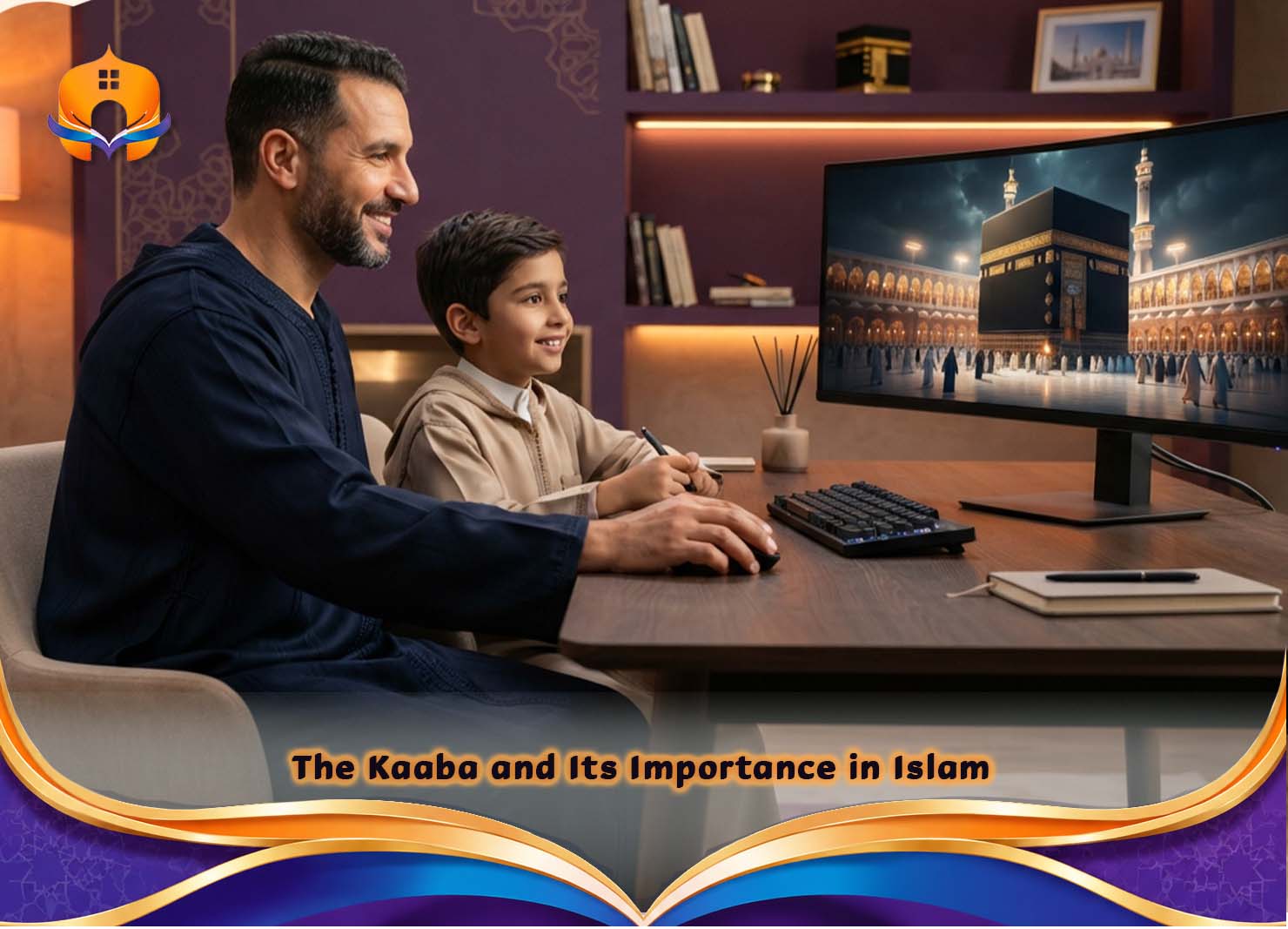
One of the well-known facts about Islam is the special importance of the Kaaba in Muslim worship. The Kaaba is a cube-shaped structure located in the Sacred Mosque in Mecca, Saudi Arabia.
Muslims around the world face the direction of the Kaaba during their daily prayers. This direction, known as the Qiblah, creates unity among Muslims everywhere, as millions of people worship Allah while facing the same location.
Muslims do not worship the Kaaba itself. Instead, it serves as a central direction of worship and a symbol of unity among believers. According to Islamic tradition, the Kaaba has a connection with Prophet Abraham and his son Ishmael, who are believed to have rebuilt it as a place dedicated to worshiping Allah alone.
Understanding the role of the Kaaba is among the important facts about Islam because it shows how Islamic practices connect Muslims through shared acts of worship and spiritual purpose.
Hajj: The Journey of Faith
Hajj is one of the greatest acts of worship in Islam. It is performed during a specific month in the Islamic calendar, and Muslims who have the physical and financial ability are required to complete it at least once in their lifetime.
During Hajj, Muslims from different countries gather in Mecca wearing simple clothing that represents equality and humility before Allah.
The pilgrimage includes several important acts of worship, such as:
- Standing at Arafat.
- Walking between Safa and Marwah.
- Circumambulating the Kaaba.
- Remembering the sacrifices and devotion of Prophet Abraham and his family.
The experience of Hajj reflects the unity of Muslims and reminds believers that all people are equal regardless of wealth, nationality, or social status.
These facts about Islam highlight that Hajj is not only a physical journey but also a spiritual experience that strengthens faith and reminds Muslims of their connection with Allah.
Ramadan and Its Spiritual Meaning
Ramadan is the ninth month of the Islamic calendar and holds a special place in Muslim life. During this month, Muslims fast from dawn until sunset and dedicate more time to prayer, charity, and reading the Quran.
Fasting is not only about avoiding food and drink. It teaches self-control, patience, gratitude, and awareness of the needs of others.
Many Muslims consider Ramadan a chance for personal improvement and spiritual renewal. Families often gather for meals after sunset, and communities increase acts of kindness and charity.
Among the important facts about Islam is that Ramadan focuses on developing good character and strengthening the relationship between Muslims and Allah.
Islamic Ethics and Good Character
Good character is one of the strongest themes in Islamic teachings. Muslims believe that faith should influence how a person treats others. Important qualities encouraged in Islam include:
- Compassion: Muslims are encouraged to show mercy toward people, animals, and all of creation.
- Forgiveness: Islam teaches the value of forgiving others and avoiding unnecessary conflict.
- Patience: Patience is considered a great virtue, especially during difficult situations.
- Generosity: Helping others through charity and support is strongly encouraged.
The Prophet Muhammad ﷺ emphasized good manners and kindness, teaching Muslims that moral behavior is an essential part of faith.
One of the valuable facts about Islam is that worship is not separated from character. Muslims believe that sincere faith should appear through positive actions and respectful treatment of others.
Misunderstandings About Islam
Many questions about Islam come from misunderstandings or incomplete information. Learning authentic sources can help people develop a more accurate understanding of Islamic beliefs and practices.
Some common misunderstandings include the belief that Islam belongs only to Arabs, while in reality Islam is a global religion practiced by people from many cultures and backgrounds.
Another misunderstanding is that Muslims worship Prophet Muhammad ﷺ. Muslims respect and love him as the final messenger of Allah, but worship is directed only toward Allah.
Exploring reliable facts about Islam allows people to recognize the difference between authentic Islamic teachings and incorrect assumptions.
People who want to understand what Islamic fiqh is can learn how Islamic legal principles are derived from the Quran and Sunnah to guide Muslims in different areas of life.
The Importance of Learning Islam Correctly
Learning about Islam requires studying reliable sources and understanding the context of Islamic teachings. The Quran, authentic teachings of the Prophet Muhammad ﷺ, and the explanations of qualified scholars are important resources for gaining knowledge.
For Muslims, learning is considered a valuable act because knowledge helps people improve their worship and daily behavior.
Students who want to improve their understanding of the Quran and Islamic principles can benefit from organized educational programs. An online Islamic school provides structured lessons that help students learn religious concepts from qualified teachers.
These facts about Islam show that education plays an important role in helping people understand the religion correctly and practice its teachings with awareness.
Parents who want to teach Islam to kids can use suitable educational methods that introduce Islamic values, manners, and Quran learning in an age-appropriate way.
How Does Islam Encourage Knowledge?
Knowledge has a significant position in Islam. The first revealed verses of the Quran encouraged reading and learning, highlighting the importance of seeking beneficial knowledge.
Islam encourages Muslims to learn about religion as well as beneficial areas of life. Throughout history, Muslim scholars contributed to different fields, including science, medicine, mathematics, and philosophy.
The important facts about Islam related to knowledge show that Islam encourages curiosity, learning, and personal development.
Seeking knowledge helps individuals make better decisions and understand their responsibilities toward themselves and society.
The connection between faith and learning is among the important facts about Islam because Islam encourages people to use knowledge as a way to improve themselves and benefit others.
A qualified online quran tutor can help students understand Quran recitation, Tajweed rules, and Islamic principles through flexible learning programs.
The Relationship Between Faith and Daily Life in Islam

Islam teaches that faith should be reflected in everyday actions. A Muslim’s relationship with Allah is connected to personal behavior, family relationships, work ethic, and social interactions.
Examples of applying Islamic teachings in daily life include:
- Being honest in business.
- Respecting parents.
- Helping neighbors.
- Keeping promises.
- Avoiding harmful behavior.
- Showing kindness to others.
These principles demonstrate that Islam is not limited to places of worship but influences every aspect of life.
Learning facts about Islam helps explain how Islamic teachings guide Muslims in personal, family, and social matters.
The practical facts about Islam reveal that faith is connected with responsibility, ethics, and positive actions.
Students searching for the best online quran teaching programs can benefit from organized courses that combine Quran reading, understanding, and Islamic values.
Frequently Asked Questions About Facts About Islam
The answers to these questions provide simple facts about Islam for people who want to understand the basic beliefs and practices of Muslims.
1. What is the main belief of Islam?
The main belief of Islam is that there is only one God, Allah, and that Prophet Muhammad ﷺ is His final messenger. Understanding this belief is one of the essential facts about Islam for anyone who wants to learn about the foundation of Muslim faith.
2. Do Muslims worship Prophet Muhammad?
No. Muslims respect Prophet Muhammad ﷺ as a messenger of Allah, but they worship only Allah. This is one of the important facts about Islam because Islam teaches that worship is directed only to the Creator.
3. What is the holy book of Islam?
The holy book of Islam is the Quran, which Muslims believe is the revealed word of Allah. Learning about the Quran is among the key facts about Islam that help people understand Islamic teachings and values.
4. Are all Muslims Arabs?
No. Muslims come from many different countries, cultures, and ethnic backgrounds around the world. The diversity of Muslim communities is one of the significant facts about Islam because Islam is a global religion practiced by people from different backgrounds.
5. Why do Muslims pray five times a day?
Muslims pray five times daily to maintain a connection with Allah, express gratitude, and seek guidance. This practice represents another important fact about Islam related to worship and spiritual discipline.
In conclusion, learning facts about Islam helps people discover the beliefs, values, and practices that shape the lives of millions of Muslims worldwide. Islam teaches belief in one God, compassion, justice, responsibility, and the importance of living with good character.
The religion encourages Muslims to seek knowledge, help others, and build peaceful communities based on respect and kindness. Understanding Islam through authentic information allows people to move beyond misconceptions and appreciate the principles that guide Muslim life.
For those interested in learning Quran recitation, Islamic basics, and developing a stronger connection with Islamic teachings, Quran House Academy provides structured learning resources that support students in their educational journey.
By exploring reliable information and studying Islamic teachings carefully, anyone can gain a clearer understanding of this global faith and its impact on individuals and communities around the world.
These final facts about Islam summarize the main ideas discussed throughout this guide and emphasize the importance of learning Islam through accurate and trustworthy sources.