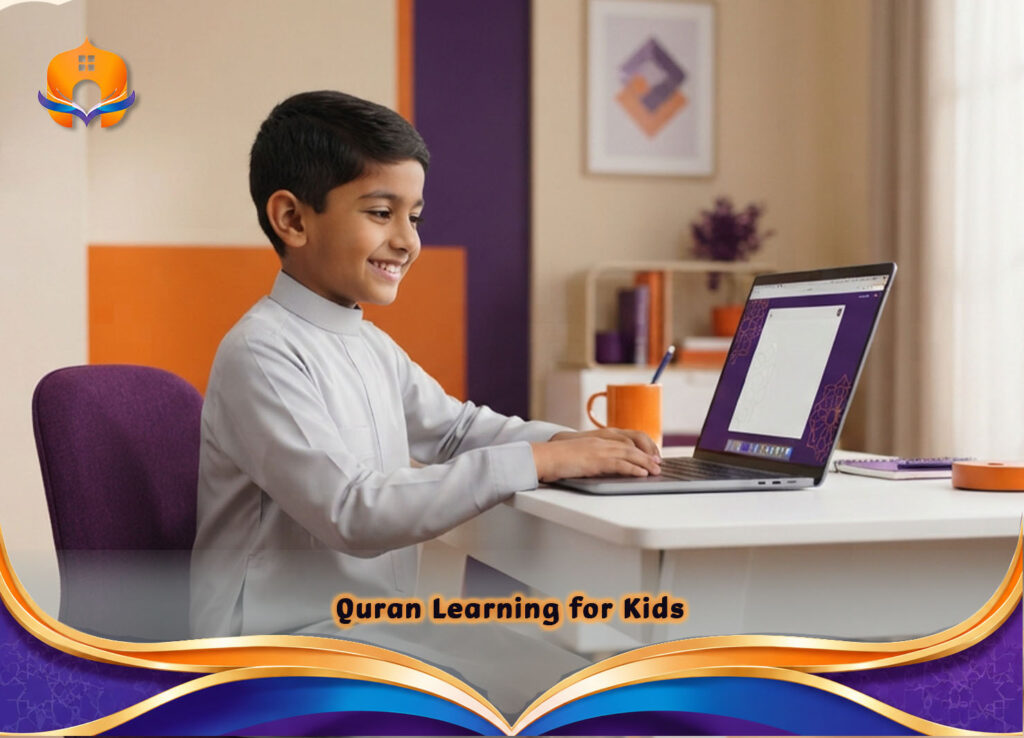
Quran Learning for kids should begin with a clear, gentle, and age-appropriate plan that helps children read, recite, understand, and love the words of Allah. Parents are not only looking for lessons; they are looking for a trusted learning environment, a qualified teacher, steady progress, and a method that keeps their child motivated.
At Quran House Academy, children can begin with the Arabic alphabet and move step by step toward Quran reading, Tajweed, memorisation, and Islamic manners. The goal is not to rush a child through pages but to build confidence, correct pronunciation, and a lifelong connection with the Quran through live, structured, and supportive online classes.
Why Early Quran Education Matters?
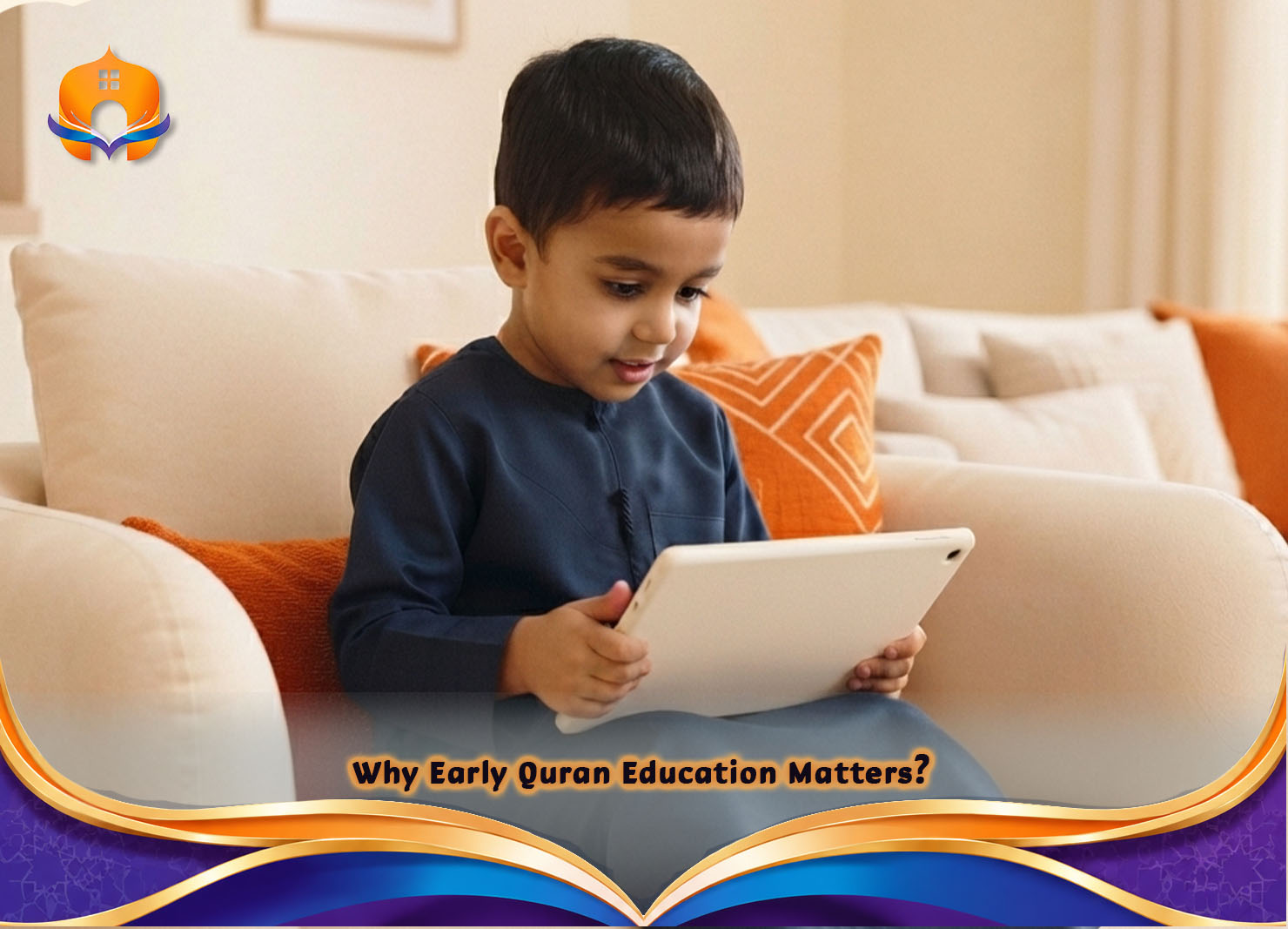
Childhood is one of the most valuable stages for building habits, language skills, confidence, and spiritual identity. When children become familiar with Quranic sounds, Arabic letters, and short surahs at an early age, learning often feels more natural. They begin to recognise patterns, repeat accurately, and associate Quran time with warmth, encouragement, and family support.
Effective quran learning for kids also gives parents a practical way to introduce Islamic values through daily learning. Children hear verses about honesty, patience, kindness, gratitude, prayer, and respect. These values become easier to discuss because they are connected to meaningful examples rather than abstract instructions. The purpose is not only memorisation. A balanced program helps a child develop:
- Correct Arabic letter recognition
- Clear pronunciation of Quranic words
- Gradual understanding of basic Tajweed
- Confidence when reading aloud
- Respect for the Quran and the learning process
- Consistency in worship and good manners
When these foundations are introduced patiently, the child is more likely to continue learning with interest instead of feeling pressured.
This connects closely with our reading quran without hijab, which many find useful.
Start Your Quran Learning Journey Today
Take the first step toward learning the Quran with confidence through structured lessons designed specifically for beginners. Whether you aim to improve your Quran reading, master correct pronunciation, or learn the rules of Tajweed, Quran House Academy provides a clear learning path in a supportive, flexible online environment. For learners who want to go further, take a look at our online quran classes for kids.
Guided by skilled Quran teachers, students receive tailored one-on-one instruction that fits their pace and learning goals. The simple teaching method helps children and adults develop strong reading skills from the comfort of home while building confidence with each lesson. Begin your Quran journey today and enjoy steady progress toward fluent, accurate recitation through a structured program designed for lasting success. For learners who want to go further, take a look at our when the quran feels empty.

Those who found this helpful often continue with our reading quran silently in your head.
What Parents Look for in a Quran Course?
Parents usually want a course that is safe, flexible, organised, and suitable for their child’s age. They also want a teacher who understands how children learn. A knowledgeable Quran teacher may know the rules perfectly, but teaching children requires additional skills such as patience, encouragement, lesson planning, and the ability to simplify difficult concepts.
A strong quran learning program for kids should offer more than repeated reading. It should provide a clear path from the child’s current level to the next realistic goal. For one child, that goal may be identifying Arabic letters. For another, it may be reading short verses without help. An advanced learner may need Tajweed correction or a structured memorisation plan.
At Quran House Academy, the learning process can be adapted to the student’s age, reading level, attention span, and family schedule. This personalised structure helps children progress without unfairly comparing them with others.
Our can a cat touch the quran can be a good complement for anyone following this path.
Building the Foundation with Noor El Byan
Noor El Byan, also written as Noor Al Bayan, is a widely used foundation method for beginners who need to learn Arabic reading before reciting directly from the Mushaf. It introduces letters, vowel marks, connected forms, and common reading patterns in a gradual sequence. This makes it suitable for young learners as well as older children who have not studied Arabic before.
In quran learning for kids, the foundation stage should never be skipped. A child who memorises the sound of a verse without recognising its letters may struggle later when asked to read independently. Noor El Byan helps connect what the child sees with what the child says. The foundation course at Quran House Academy can cover the following areas:
- Arabic alphabet recognition
- Letter shapes at the beginning, middle, and end of words
- Harakat, including Fathah, Kasrah, and Dammah
- Joining letters to form simple words
- Sukoon and silent-letter patterns
- Tanween and its three forms
- Madd letters and lengthening
- Shaddah and doubled sounds
- Guided reading practice
- Review, correction, and level assessment
This sequence gives children a clear learning map. Each skill supports the next one, so the learner is not asked to perform advanced recitation before mastering basic Arabic reading.
Many students pair this with our eating while reading quran to round out their learning.
Arabic Letters and Correct Pronunciation
The first practical goal is to help the child recognise Arabic letters quickly and pronounce them from the correct point of articulation. Some letters may sound similar to beginners, especially when Arabic is not spoken at home. The teacher must demonstrate the sound clearly and allow the child to repeat it several times without embarrassment.
Good quran learning for kids focuses on quality rather than speed at this stage. A child may need extra practice with letters such as ح, خ, ع, غ, ص, ض, ط, and ظ. The teacher can use visual examples, mouth-position explanations, listening exercises, and short repetition drills.
In this early phase, quran learning for kids should connect every new sound with a visible letter and a short reading example. Children should also learn that an Arabic letter may look different depending on its position in a word.
Understanding these changing shapes prevents confusion when the learner moves from isolated letters to complete words. Regular review is essential because recognition becomes automatic only after repeated exposure.
House Online Islamic Academy for kids is designed to support children through structured online Quran education. The focus is on live teaching, personalised guidance, qualified tutors, flexible scheduling, and a clear path from beginner reading to stronger recitation.
Families may consider Quran House Academy for several reasons:
- One-on-one online Quran classes
- Male and female Quran teachers
- Beginner-friendly Noor El Byan instruction
- Quran reading and Tajweed courses
- Memorization support
- Flexible class schedules
- Level-based lesson planning
- Regular feedback for parents
- A supportive environment for children
- Convenient learning from home
The academy’s approach to quran learning for kids is based on patience, consistency, and individual progress. Each child begins at an appropriate level and receives guidance toward the next achievable step.
The purpose is not to place every learner on the same timetable. Lessons can be adjusted according to the child’s strengths, challenges, and educational goals.
Learning Harakat and Short Vowels
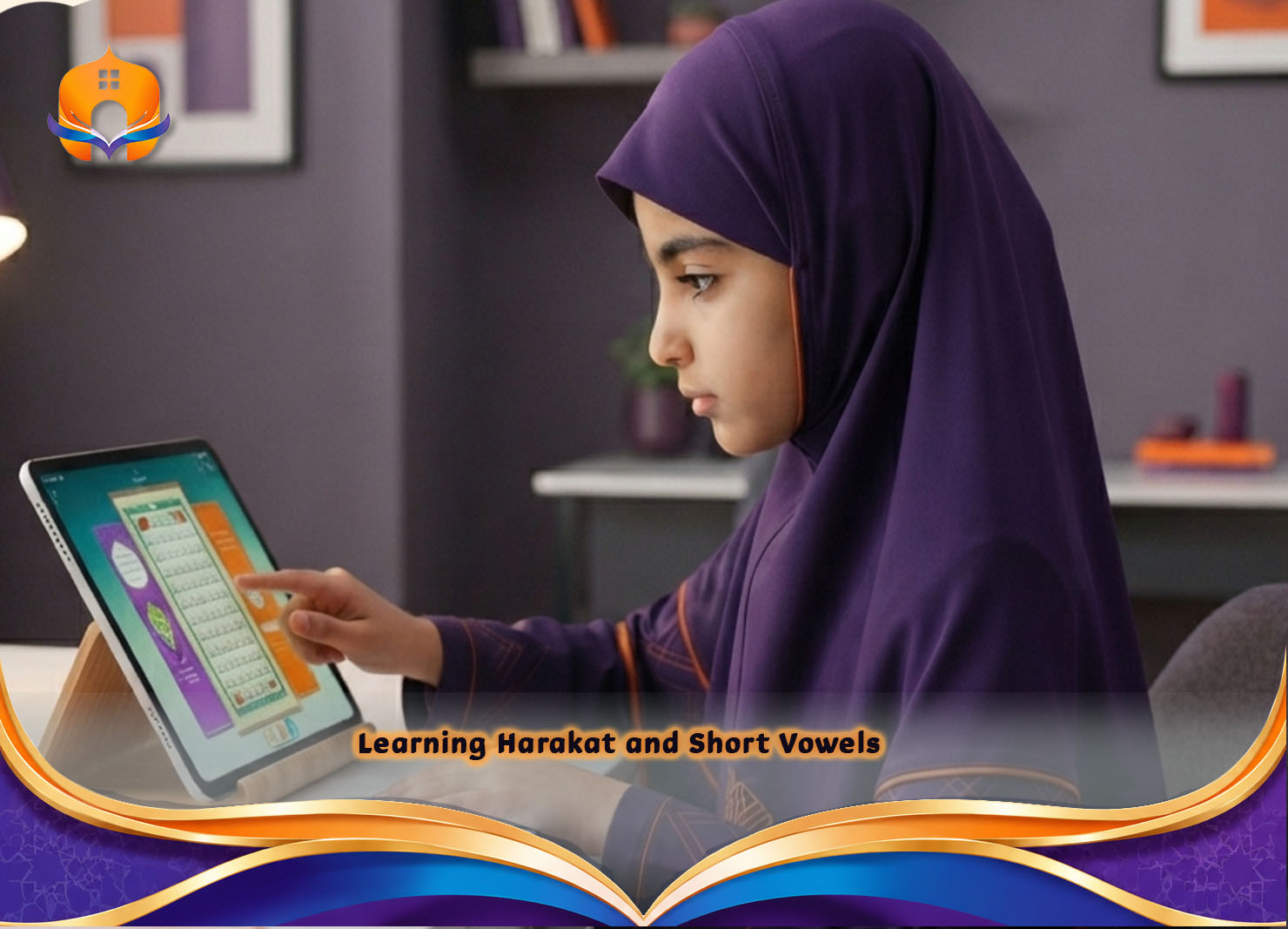
After recognising the letters, children begin reading them with short vowels. Harakat transforms letter identification into real reading. The child learns that بَ, بِ, and بُ belong to the same letter but produce different sounds.
The teacher should introduce one vowel at a time before combining them in short exercises. Children can begin with single letters, move to two-letter combinations, and then read simple words.
Visual repetition is especially useful during this stage. The child needs to see the vowel mark, hear its sound, repeat it, and then apply it to a new example.
If you’d like a teacher to guide this journey directly, our Quran classes for kids are built specifically around this age group.
Rather than explaining every grammatical detail, the teacher focuses on helping the learner recognize the sign and produce the correct sound naturally. Once the child reads the three basic Harakat confidently, more advanced patterns become easier to understand.
Sukoon, Tanween, and Shaddah
Sukoon teaches the learner to stop the vowel sound and connect the letter correctly with the one before it. Tanween introduces ending sounds that appear frequently in Arabic, while Shaddah teaches the child that a letter is emphasised and effectively doubled.
These skills can initially feel technical, but they become manageable when introduced through short examples. In quran learning for kids, the teacher should avoid explaining too many rules in one lesson.
One concept, several examples, immediate correction, and a short review are often more effective than a long lecture. Children can first practice the rule using familiar letters before encountering it in Quranic words.
At Quran House Academy, lessons can include guided reading from Noor El Byan or another suitable foundation book before the student moves to selected Quranic words and verses.
Madd Letters and Reading Fluency
Madd letters teach children when to lengthen a sound. This is an important bridge between basic Arabic reading and correct Quran recitation. If a child reads every syllable with the same length, the recitation may sound unclear or incorrect.
In quran learning for kids, the teacher can first explain natural lengthening using easy words, then introduce examples from short surahs. Children benefit from hearing the teacher repeat the word and reading it again independently.
Fluency develops gradually. It is not simply the ability to read quickly. A fluent young reader recognises letters, applies vowel signs, connects sounds smoothly, pauses appropriately, and corrects mistakes with less assistance.
This level of independence is one of the main outcomes parents expect from quran learning for kids. However, fluency should never come at the expense of correct pronunciation. Children should be encouraged to read slowly and accurately before increasing their speed.
A Step-by-Step Quran Course Structure
A well-designed course needs clear levels. Random lessons may keep a child busy, but they do not always produce measurable progress. A structured pathway makes it easier for parents, teachers, and students to understand what has been completed and what comes next. A typical pathway at Quran House Academy may include:
- An initial level evaluation
- Arabic alphabet and pronunciation
- Noor El Byan or Noorani Qaida Foundation
- Reading short words and phrases
- Reading selected Quranic verses
- Basic Tajweed introduction
- Full Quran reading practice
- Memorisation of suitable surahs
- Revision and mistake correction
- Periodic progress assessment
This structure supports quran learning for kids because it combines new material with consistent revision. Children need to feel that they are moving forward, but they also require enough repetition to make their skills stable.
The teacher should not move the student to the next level simply because a set number of lessons has been completed. Progress should depend on the child’s ability to apply the skill independently.
The Role of a Qualified Quran Teacher
A teacher has a major influence on how a child feels about the Quran. Harsh correction may make a child afraid to read aloud, while excessive praise without genuine correction may slow improvement. The most effective approach combines kindness with clear guidance. In quran learning for kids, a qualified teacher should:
- Demonstrate accurate Quran recitation
- Correct mistakes without humiliating the student
- Explain one point at a time
- Repeat difficult sounds patiently
- Adjust the lesson to the child’s pace
- Encourage appropriate questions
- Give parents useful feedback
- Maintain a respectful learning environment
A good teacher also notices when the child is tired, confused, distracted, or ready for a more challenging exercise. This awareness allows the lesson plan to remain productive without becoming overwhelming.
Quran House Academy can provide access to male and female Quran teachers according to family preferences and teacher availability. Direct interaction allows the tutor to notice small pronunciation errors that may be missed in a large class.
Quran Learning for Kids Across Different Age Groups
Children do not all learn in the same way. Age affects attention span, communication, motivation, and lesson length. A successful program adjusts the teaching method rather than forcing every child into one format.
Children Aged Four to Six
Young children need short and lively lessons. The main goals may include listening, repeating Arabic sounds, identifying letters, learning short duas, and memorising very short surahs.
Visual prompts, praise, and simple learning games can help maintain attention. Teachers may also divide one lesson into several short activities rather than asking the child to complete a long reading exercise.
At this age, quran learning for kids should feel positive and achievable. A child may learn only a small amount in each class, but consistent exposure creates a powerful foundation.
Parents should avoid expecting a four-year-old to sit silently for the same amount of time as an older child. Movement, short breaks, and repeated encouragement may be necessary.
Children Aged Seven to Ten
Children at this stage can usually follow clearer routines and complete short assignments. They may study Noor El Byan, begin reading connected words, practice Tajweed basics, and memorise short surahs with regular revision.
Teachers can also explain simple meanings and Islamic manners related to the verses. This helps the child understand that Quran study is connected to behaviour, not only to pronunciation.
Children in this age group often respond well to goals, progress charts, quizzes, and small achievements. The teacher can set a weekly target while keeping it realistic enough to prevent frustration.
Children Aged Eleven and Above
Older children may be ready for longer reading passages, more detailed Tajweed rules, structured Hifz plans, and deeper discussions about meaning. They can also participate in setting personal goals and tracking their own progress.
A teenager who begins learning late should never feel embarrassed. Quran House Academy can start from the learner’s current level and move forward with respect and encouragement.
Older beginners may progress quickly because they understand instructions more easily, but they still require patient pronunciation practice and a strong Arabic reading foundation.
Why Do One-on-One Quran Classes Work Well?
Individual lessons give the child direct attention. The teacher does not need to divide class time among many students, and the lesson can focus on the learner’s exact needs.
When the child struggles with one letter, the teacher can pause and practice it. When the learner progresses quickly, the lesson can move forward without unnecessary repetition.
Personalised Quran learning for kids is especially useful for shy children, complete beginners, students with demanding school schedules, and learners who require additional pronunciation support. The child can ask questions freely and receive immediate feedback.
One-on-one classes also make progress easier to track. Parents can receive clear updates about completed lessons, current challenges, and suitable practice goals for the following week.
The tutor also becomes familiar with the student’s recurring mistakes. Instead of correcting each lesson as though it were the first, the teacher can create exercises that directly address the child’s needs.
Children learn best when they actively participate. A lesson that consists only of listening may not hold their attention for long. Interactive teaching invites the child to read, identify, repeat, match, answer, and correct. Quran House Academy can make lessons more engaging through:
- Short reading challenges
- Letter and vowel recognition activities
- Guided repetition
- Visual learning cards
- Audio comparison
- Reward charts
- Simple quizzes
- Story-based Islamic reminders
- Progress certificates
- Positive feedback at the end of class
The aim is not to turn the Quran into entertainment. The purpose is to use age-appropriate teaching methods that help children remain attentive and motivated.
Good quran learning for kids respects the sacredness of the subject while recognising the developmental needs of young learners. Activities should always support a specific learning goal instead of distracting from the lesson.
Combining Quran Reading with Memorisation
Reading and memorisation support each other, but they are not identical skills. A child may memorize a surah by listening while still being unable to read it. Another child may read accurately but needs help retaining verses.
A balanced Quran program includes both skills. The teacher can select short surahs, divide them into small sections, explain difficult words, repeat each verse, and connect new memorisation to previous revision.
A practical memorisation routine may include:
- Listening to the assigned verses
- Repeating each verse several times
- Reading directly from the Mushaf
- Reciting without looking
- Connecting the new verse to the previous one
- Revising the previous lesson
- Reciting the complete section at the end of the week
This method strengthens quran learning for kids because it develops listening, reading, memory, and confidence together.
Children should not be judged only by the number of surahs they have memorised. Accurate recitation and strong retention are more valuable than completing large portions that are quickly forgotten.
The Importance of Regular Revision
Children often remember new material quickly, but they may also forget it without review. Revision is not a sign of failure; it is a natural part of learning. The brain needs repeated contact with letters, words, rules, and verses before they become secure. A useful weekly plan may include three types of revision:
- Recent revision of material learned during the current week
- Short-term revision for material learned during the month
- Long-term revision for older surahs and reading skills
At Quran House Academy, teachers can build revision into every class. Even five minutes of focused review can reveal which skills are strong and which ones require more practice.
Consistent quran learning for kids is usually more effective than long and irregular sessions. Ten focused minutes at home each day may support the child better than one difficult hour at the end of the week.
Revision should also be varied. The child may read to a parent, listen and repeat, recite during prayer, record a short passage, or answer a quick letter-recognition exercise.
Teaching Tajweed Without Overwhelming Children
Tajweed should be introduced gradually. Children do not need to memorise many technical definitions before they can improve their recitation. They can first learn through hearing and repetition, then understand the rule behind the sound.
For example, a teacher may begin with correct Madd timing, clear Ghunnah, and suitable stopping. More detailed rules can be added as the child’s reading becomes stronger.
In quran learning for kids, correction should focus on a small number of mistakes at a time. Correcting every detail in one sitting may frustrate the learner.
A more productive method is to choose one or two priorities, practice them consistently, and move forward after the improvement becomes stable. Previously learned rules should then be reviewed in new verses.
The long-term goal is an accurate, confident, and beautiful recitation supported by an age-appropriate understanding of the main Tajweed rules.
How Parents Can Support the Learning Journey?
Parents should also choose programs that match their child’s learning needs and personal comfort. For example, families with daughters may prefer Quran classes for sisters because they provide a supportive learning environment with qualified female teachers while maintaining high educational standards and encouraging steady progress.
A child notices whether Quran time is treated as a priority or as an optional task. Parents can help by:
- Preparing a quiet place before class
- Making sure the device and internet are ready
- Praising effort rather than only perfect results
- Listening to the child recite
- Following the teacher’s practice notes
- Avoiding comparison with siblings or friends
- Celebrating small achievements
- Keeping the study schedule realistic
The home atmosphere affects quran learning for kids. When parents are calm and encouraging, children are more willing to try, make mistakes, and improve.
It is also helpful to inform the teacher about the child’s learning style, school commitments, and any recurring reading difficulty. Strong communication creates a consistent experience between class and home.
Building a Positive Relationship with the Quran
The way children feel during their lessons can influence their future relationship with Quran study. When every mistake leads to criticism, the child may begin to associate recitation with stress. When the experience includes patience and encouragement, the learner becomes more willing to practice.
Parents and teachers can build a positive relationship by explaining that mistakes are expected. Even skilled readers develop through repeated correction and effort.
Children should also understand why they are learning. Simple conversations about worship, guidance, reward, character, and closeness to Allah can give the lessons greater meaning.
The objective is not to remove discipline. Children still need routines, assignments, and respectful behaviour. However, discipline should guide them toward improvement rather than make them fear the Quran lesson.
Quran education provides an opportunity to teach simple Islamic manners alongside reading. A few minutes may be used to discuss honesty, kindness to parents, respect for teachers, helping others, cleanliness, prayer, and gratitude.
These discussions should remain age-appropriate and connected to daily life. A young child may learn to say Bismillah before beginning, handle the Quran respectfully, and listen quietly while a verse is recited.
Older children may discuss how a verse relates to school behaviour, friendships, family responsibilities, or personal choices.
This balanced approach makes quran learning for kids more meaningful. The child learns that the Quran is not only a text to be recited during class but a source of guidance that influences everyday actions.
Many Quran academies also include an Islamic studies course for kids alongside Quran lessons. This combination helps children understand Islamic beliefs, acts of worship, good manners, and daily etiquette while strengthening their connection with the Quran.
Creating a Simple Weekly Routine
A routine helps children know what to expect. It reduces resistance because Quran study becomes a familiar part of the family schedule. The routine should remain realistic, especially during school days.
This type of schedule is especially beneficial for families attending Online Quran classes in the USA, where flexible lesson times make it easier to balance school, family responsibilities, and consistent Quran practice without overwhelming young learners.
An example may include:
- Two or three live classes each week
- Ten to fifteen minutes of practice on non-class days
- One day dedicated to full revision
- One short listening session during the weekend
- A monthly progress discussion with the teacher
For young learners, short and frequent practice is usually better than long sessions. Older children may be able to manage longer reading or memorisation periods.
The success of quran learning for kids depends on consistency more than intensity. A manageable routine that continues for several months will often produce better results than an ambitious plan that stops after two weeks.
Parents can also select a regular time when the child is alert. Scheduling lessons immediately after a long school day may make concentration difficult, while a calmer period can produce a more effective class.
Common Mistakes Parents Should Avoid
Parents usually have good intentions, but some habits can make Quran learning more difficult. One common mistake is expecting rapid results from a complete beginner. Reading Arabic and applying Tajweed require time, repetition, and correction.
Another mistake is changing teachers or methods too frequently. Sometimes a change is necessary, but constant switching may prevent the child from settling into a stable learning pattern. Parents should also avoid:
- Using fear as the main source of motivation
- Punishing every reading mistake
- Comparing progress with other children
- Ignoring the importance of revision
- Choosing lesson times when the child is exhausted
- Focusing only on the memorised quantity
- Expecting adult-level concentration from a young child
- Completing the child’s assignments for them
Healthy quran learning for kids builds discipline without damaging confidence. The child should understand that improvement requires effort, while also knowing that mistakes are a normal part of the journey.
Measuring Real Learning Progress
Progress should be measured by skills, not only by the number of pages completed. A child may spend several weeks strengthening pronunciation, and that improvement can be more valuable than rushing through a new book. Useful signs of progress include:
- Faster recognition of Arabic letters
- Fewer pronunciation mistakes
- Better ability to join letters
- Improved reading without prompting
- More accurate application of basic Tajweed
- Stronger retention of memorised surahs
- Greater confidence during recitation
- Increased willingness to practice independently
Quran House Academy can use evaluations and teacher feedback to show families where the learner started and how the child is developing.
This makes quran learning for kids more transparent and helps parents set realistic goals. Progress reports can also identify small problems before they become established reading habits.
How Long Does It Take to Read the Quran?
There is no single period that applies to every child. The time required depends on the learner’s age, starting level, lesson frequency, concentration, practice routine, and familiarity with Arabic.
Some parents also choose female quran classes for their daughters because they provide a comfortable and encouraging learning environment with experienced female instructors. This setting often helps students participate with greater confidence while developing strong Quran reading and recitation skills.
A child who speaks Arabic may recognise vocabulary more easily but still require Tajweed correction. A non-Arabic-speaking child may need more time with letter sounds and connected words.
Parents should be cautious about programs that promise complete fluency within an unrealistically short period. A child may make visible progress quickly, but stable Quran reading requires regular practice.
The most productive goal is continuous improvement. Instead of asking only when the child will finish a book, parents can ask whether pronunciation, independence, fluency, and confidence are improving each month.
What Can Children Achieve?
With regular attendance, home practice, and teacher support, children can make meaningful progress. Results vary according to age, starting level, lesson frequency, and effort, but a structured program can help the learner:
- Read Arabic letters correctly
- Understand common vowel signs
- Join letters to form words
- Read short Quranic passages
- Apply basic Tajweed rules
- Memorise selected surahs
- Improve listening and repetition
- Build confidence in recitation
- Develop respect for the study of the Quran
The real value of quran learning for kids is not limited to completing a course. It is helping the child develop a skill and spiritual connection that can continue throughout life.
Even after a child becomes able to read independently, regular teacher guidance remains valuable. The learner can continue improving Tajweed, fluency, memorisation, and understanding.
Starting the Journey with Confidence

The first step is usually a level assessment. This allows the teacher to determine whether the child needs alphabet instruction, Noor El Byan, reading practice, Tajweed correction, or memorisation support.
After the assessment, parents can choose a suitable schedule and begin live classes. The child should have a quiet space, a reliable device, and a simple notebook for practice notes. The teacher can then create a learning plan based on the student’s goals.
Parents do not need to wait until their child is “ready enough.” Readiness develops through guided practice. Beginning with the correct level is more important than beginning with advanced material.
Quran House Academy helps families turn quran learning for kids into a clear, manageable, and encouraging journey from the first lesson onward.
Frequently Asked Questions about Quran Learning for Kids
Parents often have questions about Quran learning for kids, including the best teaching methods, course progress, and effective learning strategies. Below are answers to some of the most common questions.
Should a child use English transliteration while learning to read the Quran?
Transliteration may help briefly with unfamiliar sounds, but it should not replace Arabic script. Children should gradually connect each sound directly to its Arabic letter so they can become independent readers.
Is it normal for a child to repeat the same course level?
Yes. Repeating a level can strengthen weak skills and prevent future reading problems. Advancement should depend on mastery, not on how quickly a book is completed.
Does a child have to perform wudu before an online Quran lesson?
Wudu can be encouraged as part of respectful preparation. Rulings related to touching a physical Mushaf may differ according to the circumstances, so families can follow guidance from a trusted local scholar.
Can a left-handed child learn Arabic and Quran reading without difficulty?
Yes. Hand preference does not prevent a child from learning Arabic letters or Quran recitation. The teacher should simply allow a comfortable writing position when writing practice is included.
In Conclusion, quran learning for kids becomes successful when children receive patient teaching, structured lessons, regular revision, and encouragement at home. A strong foundation in Arabic letters, Noor El Byan, reading practice, Tajweed, and memorisation allows the child to progress with confidence instead of confusion.
Quran House Academy provides live online support for beginners and developing readers through personalised classes, qualified teachers, and flexible schedules.
The most important step is to begin at the child’s real level and continue consistently. With the right guidance, Quran study can become a meaningful part of the child’s daily life and a source of knowledge, character, and spiritual growth.