

Scholars widely agree that reading the Quran with Tajweed protects its meaning. Students who join a guided Tajweed course at Quran House learn this in depth.
Is it an obligation to read the Quran with Tajweed?
First, let’s define Tajweed. Tajweed is beautifying and perfecting Quran recitation by giving each letter its due right, meaning its correct point of articulation, its correct characteristics, and the rules that govern how it interacts with the letters around it.
The Quran is the word of Allah, and it is an obligation on every Muslim to read it the way Allah revealed it. Allah revealed the Quran to Prophet Muhammad, peace be upon him, and he in turn recited it to his companions in exactly the same way he received it. The companions then recited it and taught it to the next generation the same way the Prophet taught it to them. This chain continued, generation after generation, each one reciting the Quran and teaching it to the next, until it reached us today. So we have an obligation to recite the Quran the same way our Prophet recited it after receiving it from Allah.
Reading the Quran the way Allah revealed it, and the way Prophet Muhammad recited it, is a must, and Tajweed is the tool that helps us accomplish that. Since the goal itself is obligatory, and Tajweed is the means of reaching it correctly, reading the Quran with Tajweed becomes an obligation as well.
This connects closely with our hams tajweed, which many find useful.
It’s worth pairing this with our learning tajweed online for a fuller picture.
For more like this, take a look at our contact us.
The scholarly distinction between the rule and the science
Scholars of Quran recitation generally divide this question into two related but distinct matters. The first is the practical application of tajweed rules while reciting, meaning actually pronouncing the letters correctly and applying the rules as you read. Most scholars consider this a personal obligation, known as fard ayn, upon every Muslim who recites the Quran, since mispronouncing the words of Allah can change meanings or simply fail to honor the way the Quran was revealed.
The second matter is studying tajweed as a formal science, meaning learning the names of the rules, memorizing their technical definitions, and being able to explain why a particular letter is pronounced a certain way in a given context. This deeper academic study is generally considered a collective obligation, known as fard kifayah, meaning that if enough people within the community master it and are available to teach others, the obligation is fulfilled for the community as a whole, though individual practice of correct pronunciation remains required of everyone.
Those who found this helpful often continue with our rules madd tajweed.
This connects closely with our self studying tajweed, which many find useful.
Quranic evidence for reciting with Tajweed
The Quran itself points directly to this obligation. In Surah Al-Muzzammil, verse 4, Allah instructs the Prophet Muhammad: “And recite the Quran with measured, careful recitation.” The word used here, rattil, is the same root from which the term tarteel comes, referring to slow, clear, well articulated recitation, which is essentially what tajweed rules are designed to produce and preserve.
Beyond this direct instruction, the entire chain of transmission of the Quran, from the Prophet to his companions and onward through the generations, was preserved not just in written form but in precise oral recitation. Tajweed rules exist specifically to protect that oral transmission from drifting or distorting over time, which is part of why scholars view correct pronunciation as inseparable from the obligation to recite the Quran faithfully.
Our quran memorization can be a good complement for anyone following this path.
Those who found this helpful often continue with our reading quran like a pure arab.
What happens when tajweed rules are ignored
Mistakes in recitation are generally divided into two categories by scholars of tajweed. The first, called lahn jali, or clear error, involves mistakes that change the actual meaning of a word or violate the basic grammar of the Arabic text, such as mispronouncing a letter so completely that it becomes a different letter altogether, or shifting a vowel in a way that changes a verb’s tense or a noun’s case. This type of mistake is considered more serious, since it can distort the intended meaning of Allah’s words.
The second category, lahn khafi, or hidden error, involves smaller technical mistakes that do not change the meaning but do violate the finer rules of tajweed, such as not properly elongating a vowel that should be stretched, or failing to apply nasalization where it is required. While less severe than clear errors, these hidden mistakes are still something students are encouraged to correct, since perfecting them is part of honoring the Quran’s recitation as closely as possible to how it was revealed.
Many students pair this with our quran female teacher to round out their learning.
Our mistakes learning quran online can be a good complement for anyone following this path.
Common tajweed rules every student should know
- Makharij al-huruf, the precise articulation points of each Arabic letter, which ensures letters are not confused with similar sounding ones.
- Sifaat al-huruf, the characteristics of each letter, such as whether it is heavy, light, whispered, or voiced.
- Rules of noon sakinah and tanween, covering when these sounds are pronounced clearly, merged, hidden, or converted into a different sound depending on the letter that follows.
- Rules of meem sakinah, which govern how this letter behaves before different following letters.
- Madd, the rules for elongating certain vowel sounds, which vary in length depending on the specific situation in the text.
- Qalqalah, a slight bouncing or echoing sound applied to specific letters when they carry a sukoon.
If this is an area you’d like to explore in more depth, check out our rules tajweed.
Many students pair this with our reciting surah kahf to round out their learning.
Why tajweed matters beyond just following rules
Some students initially view tajweed as a long list of technical rules to memorize, which can feel intimidating at first. It helps to remember that every rule exists for a reason rooted in how the Quran was actually revealed and recited by the Prophet Muhammad. Learning tajweed is not about adding unnecessary complexity to recitation, it is about recovering and preserving the exact sound of the Quran as it was given, letter by letter, the same way it has been passed down faithfully for over fourteen centuries.
There is also a spiritual dimension to this precision. Reciting slowly and correctly, rather than rushing through verses, naturally encourages more reflection on the meaning of what is being recited, which is part of why scholars link tajweed not just to correctness but to a deeper, more attentive relationship with the Quran.
For learners who want to go further, take a look at our quran cert teachers.
If this is an area you’d like to explore in more depth, check out our surah muzammil.
Frequently asked questions
For learners who want to go further, take a look at our surah ala.
Is my prayer invalid if I make a small tajweed mistake?
Generally, minor hidden errors, lahn khafi, do not invalidate prayer, though they should still be corrected over time with practice. Clear errors that change meaning, lahn jali, are taken more seriously and should be addressed as soon as possible with a qualified teacher.
For a deeper dive, take a look at our surah taha.
Can I start reciting the Quran before I have learned all the tajweed rules?
Yes. Most teachers encourage students to begin reciting immediately while learning tajweed gradually alongside their recitation, correcting mistakes as they are identified rather than waiting until every rule is mastered before starting.
It’s worth pairing this with our surah fajr for a fuller picture.
Is tajweed only necessary for reciting in prayer?
No. The obligation to recite correctly applies whenever the Quran is being recited, whether inside or outside of prayer, though extra attention is often given to recitation during Salah since it is repeated multiple times daily.
This connects closely with our surah taghabun, which many find useful.
How long does it typically take to learn tajweed properly?
This varies widely depending on the student’s starting level, how much time they dedicate each week, and whether Arabic is already familiar to them. Many students reach a comfortable, correct level of recitation within several months of consistent practice with a qualified teacher, while deeper mastery can take considerably longer.
Those who found this helpful often continue with our makki madani surahs.
A brief history of how tajweed became a formal science
During the time of the Prophet Muhammad and his immediate companions, correct recitation was preserved almost entirely through direct listening and repetition, since the community was small and close contact with the Prophet made oral correction constant and natural. As Islam spread rapidly across new regions and new, non-Arabic speaking populations began learning the Quran, scholars recognized a growing risk that pronunciation errors could creep into recitation without anyone available to correct them directly.
In response, early scholars began formally documenting the rules that governed correct pronunciation, transforming what had been an intuitive, orally transmitted skill into a structured science with clear definitions and categories. Figures such as Abu Ubayd al-Qasim ibn Sallam and later Ibn al-Jazari are frequently credited with major contributions to organizing and preserving these rules in written form, work that still underpins how tajweed is taught today, over a thousand years later.
Our are online quran classes halal can be a good complement for anyone following this path.
How tajweed differs from qira’at
Students sometimes confuse tajweed with qira’at, the science of the different authentic recitations of the Quran, but the two are distinct subjects that work together. Tajweed refers to the universal rules of correct pronunciation that apply across all authentic ways of reciting the Quran, covering things like articulation points, elongation, and the treatment of certain letter combinations. Qira’at, on the other hand, refers to the several authentically transmitted variations in how certain words or vowels are recited, all tracing back through valid chains of transmission to the Prophet Muhammad.
In simple terms, tajweed is about reciting correctly within whichever authentic recitation a student is learning, while qira’at is about which specific authentic version of the text and pronunciation is being followed. Most students, especially beginners, focus on the widely taught Hafs recitation from Asim, applying tajweed rules within that particular tradition before, if they choose, exploring other authentic qira’at later in their studies.
Many students pair this with our is it fard to learn quran in arabic to round out their learning.
Practical exercises for building tajweed skills
- Start with short surahs and focus entirely on correct pronunciation before worrying about recitation speed.
- Record yourself reciting and compare it against a trusted, well known reciter to spot differences.
- Practice isolated letters that are difficult for your native language, repeating them slowly until the articulation point feels natural.
- Work through one tajweed rule at a time with a teacher, applying it specifically in several different verses before moving to the next rule.
- Recite out loud rather than silently whenever possible, since tajweed is fundamentally about sound, not just visual recognition of the text.
If this is an area you’d like to explore in more depth, check out our reading the quran to understand islam.
Learning Tajweed with qualified teachers
Understanding that tajweed is an obligation is only the first step. Applying it correctly requires consistent, personalized feedback from a teacher who can hear exactly where a student’s pronunciation needs adjustment, something that is difficult to achieve from books or videos alone. At Quran House, our online Tajweed courses pair students with instructors trained at Al-Azhar, who listen closely to each recitation, correct mistakes in real time, and explain the reasoning behind every rule so that students understand rather than simply memorize.
To deepen your practice, you might also explore our Quran classes for sisters, our online Quran academy for sisters, or our online Quran academy for adults.
For learners who want to go further, take a look at our reading the quran in modern standard arabic.
Overcoming the fear of making mistakes
Many adult learners hesitate to begin studying tajweed because they worry about how many mistakes they will make along the way, especially if Arabic is not their first language. Experienced teachers consistently point out that mistakes are simply part of the learning process, and that a teacher’s role is precisely to catch and gently correct those mistakes before they become ingrained habits. Waiting until you feel ready before starting often delays progress far more than making mistakes early and correcting them with proper guidance.
It also helps to remember that Allah judges intention and sincere effort, and that a student genuinely striving to recite correctly, even while still learning, is engaged in a praiseworthy act of worship. Perfection is the goal to work toward steadily, not a bar that must be cleared before recitation is considered acceptable to begin. A supportive teacher who focuses on encouragement alongside correction makes an enormous difference in how comfortable a student feels moving through this process, turning what could feel like a stressful evaluation into a warm, patient partnership built around a shared goal.
Final thoughts
Reading the Quran with Tajweed is not an optional extra reserved for advanced students. It is the means by which the Quran has been preserved, letter for letter, exactly as it was revealed to Prophet Muhammad and passed down through an unbroken chain of transmission. Learning and applying tajweed rules, patiently and with proper guidance, is how every Muslim honors that chain and recites the words of Allah as closely as possible to how they were first spoken. Whether you are just beginning your Quran journey or refining recitation you have practiced for years, there is always another layer of precision and understanding within reach with consistent, guided practice.
Final Thoughts
Whether or not it is strictly obligatory, reading the Quran with Tajweed is highly recommended by scholars. For the original text, see Quran.com.
Quick FAQ
Is reading the Quran with Tajweed obligatory for everyone? Scholars differ, but reading the Quran with Tajweed is strongly encouraged for all Muslims.
In summary, reading the Quran with Tajweed brings both reward and clarity, and reading the Quran with Tajweed regularly builds lasting, correct habits for every student.
Teachers who guide students in reading the Quran with Tajweed often emphasize daily practice, since reading the Quran with Tajweed becomes natural with repetition.
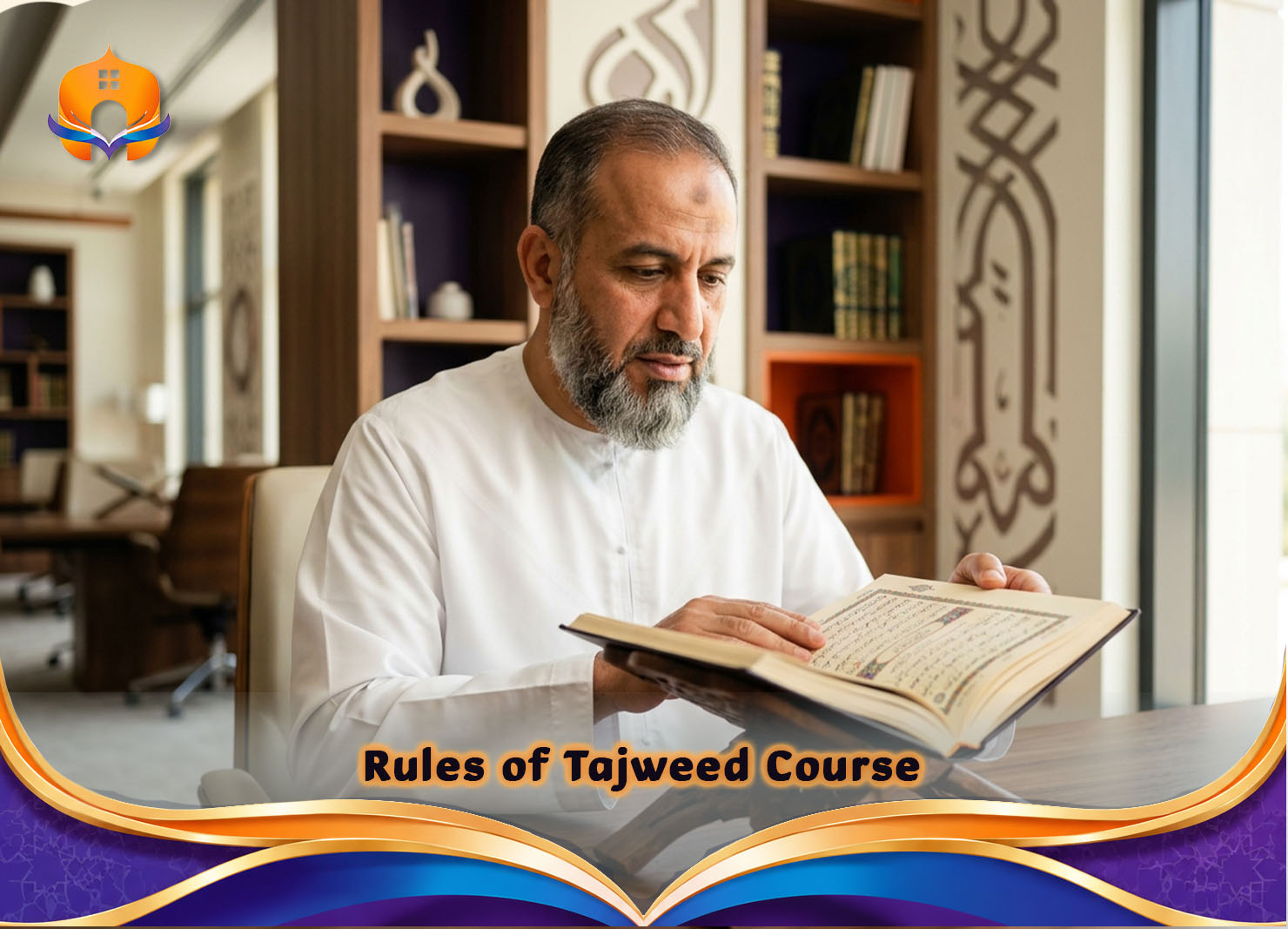
Learning about quran with tajweed matters.
Every student benefits from quran with tajweed.
Understanding quran with tajweed takes patience.
Our teachers explain quran with tajweed clearly and simply.
Many scholars have written about quran with tajweed in depth, and reading their works helps students understand quran with tajweed more fully in daily practice.
People often ask about quran with tajweed today.